Showing posts with label horror. Show all posts

Friday, November 11, 2016

Autumn Movies Catch Up: These 4 films I saw in theaters in the last month or so and haven't reviewed yet.

Here's just a quick little look at some films which I didn't feel strongly enough about to fill a major review, but which I did see and want to comment on.

Snowden: Good lead performance by Joseph Gordon-Levitt and some nice supporting parts by Shailene Woodley, Nicolas Cage, Timothy Olyphant, Zachary Quinto, Joely Richardson, Tom Wilkinson, Melissa Leo, Scott Eastwood, and Rhys Ifans. This is a very well-executed suspense film, with tons of moments of tension and is quite paranoia-inducing, something Oliver Stone has always been great at capturing. Gordon-Levitt captured Snowden's voice and mannerisms to a tee, and the only complaints is that the final act is kind of rushed because the film is already fairly long, but I felt the suspense could've been milked during the leaking/espionage moments just a bit longer. There is one major surprise towards the end which I won't spoil but which floored me and made my jaw drop a bit. Better than the average biopic/historical thriller. 7/10 stars.


Blair Witch: As both a fan of the original and of Adam Wingard's work, I was crushed by how disappointing, insulting, bland, boring, and hollow this film was. It was so empty and had such a lack of characters it felt like it breezed by in 40 mins, and the visuals of the cabin may have been nice, but unlike the original, this feels like a run-of-the-mill, direct-to-video throwaway found footage film, not a taut and slowly creeping horror phenomenon. I expected more humor, ingenuity and genuine chills from Wingard but this was just trash. I recommend the oft-forgotten and surreally bad Blair Witch 2: Book of Shadows over this any day. There was talks of making the 3rd film in this series an origin/period piece of the witch, which would've made a unique trilogy where each film is drastically different in style and execution but alas, this is a watered-down, nonsensical sequel with no real point. It would've been better to just ket the franchise die than to get this. 2/10 stars.


Jack Reacher: Never Go Back: The original Jack Reacher was a surprise audience favorite in December 2012, as it had a lot of exciting action mixed with lighthearted humor and poked fun at its own tropes. The sequel follows suit and manages to deliver another fun, harmless little spy thriller with a ridiculously skilled main hero as well as some new cast additions such as Cobie Smudlers, Aldis Hodge, Patrick Heusinger, Danika Yarosh, Holt McCallany, and Robert Knepper. The plot isn't quite as intriguing or twisty as the original's, but it is a solid follow-up with some Halloween sequences to hammer home the season. Edward Zwick brings his experience directing action to this film, and it's nice to see him and Tom Cruise work together again, though now it's becoming clear Cruise's age is beginning to make his roles as unstoppable super-killers less believable. 7/10 stars.


The Accountant: This unique thriller film sees Ben Affleck fully inhabit a character again, playing a man with some form of autism that makes him a genius mathematician and who is also trained to be an unstoppable murder machine by his ex-military father. The cast is fantastic, featuring J.K. Simmons, Jeffrey Tambor, John Lithgow, Jon Bernthal (a lot of TV bad guys here), Anna Kendrick, and Cynthia Addai-Robinson, and the plot is structured kind of strangely, with many plots not really coming full circle until the very end, but it is almost like a well-written suspense novel in that way, and I was sure it was based on some source material, but no, it's all from the screenplay of Bill Dubuque. Some of the twists may land differently for some people, but I felt they were all executed satisfyingly and probably can provide a lot of enjoyment on second viewings. Overall, a very solid thriller film with a great lead character. 7/10 stars.

                                                  (Images: Wikipedia)


Sunday, July 31, 2016

The Conjuring 2: A fine sophomore effort in the marginally overrated horror franchise

James Wan once again returns to the horror genre to deliver a sequel even more loosely factual than the original.

The Conjuring 2:
In 1977, Ed and Lorraine Warren, the lovable ghost-hunting couple, find themselves travelling to London to investigate a poltergeist (disruptive spirit) in a townhouse occupied by a single mother and her several children. However, this seemingly everyday haunting (and probable hoax) grows evermore angry and invasive as time goes on, and the Warrens begin to suspect a far more sinister entity is at play.
    The Enfield Poltergeist, like any other case the Warrens were a part of, is one of the most debated ghost sightings/possible hoaxes ever documented, and this film milks that quite a bit. Watching the footage and photographs with the film back-to-back, the recreation is incredibly detail-accurate and many characters and locations are nearly identical to their real-world counterparts.
    The leads Patrick Wilson and Vera Farmiga are incredibly likable and hold the movie together, while also adding in humanizing flaws the first film left out of it's borderline angelic portrayal of the couple (Ed's passion and proclivity towards anger, for example). Wilson and Farmiga are terrific and often unnoticed actors that are able to generate a lot more chemistry than seen in most horror film couples (definitely moreso than in Wan's own Insidious, which featured Wilson opposite Rose Byrne), as well as give the film a more emotional, dramatic feel. The shame is the film Warrens are so likable it makes the very real (and oft-reported) possibility the real-life Warrens were nothing more than poorly masked frauds even more upsetting.
     Frances O'Connor and Madison Wolfe were very serviceable as the single mother Peggy, and her daughter Janet, the child the film pays the most attention to. Now this is no Exorcist, but Wolfe turned in a solid performance as the possessed girl, though sometimes the obviously dubbed "possessed" voice is more laughable than scary most of the time (hearing this little frail British girl speak in a gruff, Cockney man's voice is pretty amusing). O'Connor is also above-average as the single mother, who I felt a lot of sympathy for, and the fact that it's a single mother also makes the horror a lot more frightening, as this poor, stressed-out woman now has to deal with these fantastical forces she cannot hope to combat coming after her children. However, you may notice I'm using rather dull words to describe the performance of these two, like "solid" or :above-average," because frankly, after seeing this film over a month ago (that's procrastination for you), I can't really remember much about them other than being just pleased with them. Nothing to write home about. Unfortunately, that's rather routine for horror films these days.
    Simon McBurney plays Maurice Grosse, another key figure in the real-life case, who at first comes off as the cardboard-cutout, bumbling paranormal investigator who seems to be in it for his own publicity, but has some more grounded moments that ultimately won me over with him. However, one character I can say was the most terribly flat, misrepresented, almost insulting character was Franka Potente as Anita Gregory, another real-world character and a skeptic of the case. Nothing against Potente, but the character is purposefully written to make skeptics look bad. She insults the victims and other investigators at inappropriate times, and seethes smugness and bitchiness from the moment she appears on screen. Her judgemental and self-satisfying smirk as she tears down the daughter's claims towards the climax are enough to make anyone despise her. But then I realized "Hold on, this is a real person. This persona really exists. And here they are reduced to a caricature." She's not even a character, she's just a tool to make the audience hate skeptics and anyone who claims the Warrens or their cases are fraudulent. Another skeptic character (portrayed by Cory English) who appears early on on a talk show opposite the Warrens, is similarly portrayed as a pompous, irritable, and dislikable man who personally attacks the duo instead of relying on science and reason (as a skeptic would).
    Bob Adrian, veteran voice actor Robin Atkin Downes, Bonnie Aarons, and Javier Botet (known for his work on the REC series) round out the principle cast as the entities in the film. I will say this, for all the silly (sometimes downright laughable) moments and the reliance on jump scares, the film did a genuinely great job of building up the menace of the antagonists and really getting under my skin (Wan has a knack for this, let me tell you). While the "main" ghost I found not all that frightening (it's just a normal old man with a gruffer voice and discolored eyes, eerie? A little. Terrifying? Not really, seen it done better.), the other entities (the demon nun seen in advertising and another I won't spoil), were not a part of the real-life story but were nonetheless very effective. That nun crept into my dreams for nights after I saw the film (although, the use of CGI that sometimes accompanied it was really bad and took me out of it; I felt it was already really creepy in a refreshingly simplistic way, so having an obviously CG 'demon mouth' effect on it was just a bad call). The film's use of "Hark! The Herald Angels Sing" is not only appropriate (it's set during the holidays) but will make you shudder everytime it plays around Christmastime.
    Speaking of which, the music choices are excellent. Joseph Bishara's score is, again, a little reminiscent of his Insidious work, but the soundtrack is excellent. "London Calling" by The Clash and "I Can't Help Falling in Love with You" by Elvis Presley are terrific classic rock tracks that make it into the film, the latter being used very effectively, to my surprise.
    I also noticed the film makes use of the R-rating a lot more. The original's R rating was a shock to the producers and Wan, but they played it up in the marketing ("A film so scary and real it was rated R just because it's so accurate it scared the MPAA" was the gist of it), and now, they rolled with it, with some more gruesome moments (not full-on gore, but definitely bloodier than the first in a few key scenes).
    Some might also find the religious angle played up in this film, just like in the last, a little off-putting if you aren't really a religious person (the heroes are Catholic and use their faith in God to help them find the courage to fight demons- it's honestly even more overt than the religious themes in The Exorcist) but I wasn't all that bugged by it.
    Overall, The Conjuring 2 is a fun time getting a safe, easy scare. Is it a great movie? No. It's not even a particularly great horror movie. But it is an entertaining and fairly solid one. If it's still playing near you, go check it out if you like horror films or the paranormal investigative side of it (just don't consider this a historically accurate movie by any stretch). 6.5/10 stars.


Conjuring 2.jpg                                                (Image: Wikipedia)

Friday, March 18, 2016

The Witch: A terrific examination of Puritan culture, repressed desires, and paranoia, all in a tightly paced and impressively executed period horror package

Today, I look at the incredible debut project from Robert Eggers.

The Witch:
An isolated Puritan family on a farm in the uncharted territories of New England are faced with horrific tragedy when their newborn Sam goes mysteriously missing. Suspecting a witch is in their midst, the family must fend off this insidious and seemingly supernatural force as it tears their family apart, fueled by their restrictive religious beliefs and superstitious fears.
    Robert Eggers has constructed here a brilliant horror film, and a tautly thrilling period drama about an unraveling family facing both the hardships of their isolated, conservative lifestyle and poor harvest as well as more primal fears such as the fear of the unknown. The inspiration from Puritan folklore is undeniable, namely given away by the subtitle A New England Folktale, but also the setting and themes. The dark, foreboding wood which threatens to envelop the relatively peaceful and serene green farmland is a staple of Grimms' Fairy Tales like Red Riding Hood and Hansel and Gretel, not to mention the brief glimpses we get of the titular monster's cottage in the deep woods and her various guises she takes (I won't give one away but let's say it's fairly reminiscent of a popular female fairy tale character) seem to be images we've all seen re-imagined in countless interpretations of classic stories.
    The nuance and subtlety of characters and their motivations and repressed desires is something I was surprised the film tackled as well as it did. It never feels as though it is shoving anything in your face, but rather has slight implications, and keeps you in the dark. In fact, it can never be sure up until the climax that what we are seeing is just the product of cabin fever mixed with religious indoctrination-related fears of the Devil, or is truly the Prince of Darkness infesting the familial cottage.
   The musical score by Cube composer Mark Korven is pitch-perfect, reminiscent of the more experimental soundtracks of the 70's horror films while also capturing the tone of the film well: slow-building, uncomfortable, and searing to experience. The compositions made each scene elevated in tension and ominousness, making me hope that the upsetting and gruesome acts on screen would cease and the horrible, disjointed chants and rhythms of the music would stop infesting my eardrums, and I cannot give a bigger compliment to the sound design than that.
    Eggers' attention to period accurate sets, costumes, and dialogue will off-put the teen audience members who will have unmistakably flocked to this film expected the dull and tired jump-scares of Blumhouse films, only to discover the scenes in this film sometimes read like that classic play they hate reading in English class. The shame in the greatness of this film is the majority of its' audience (the aforementioned teens and college-aged slasher and jump scare buffs)  will not appreciate the period dialogue or subtle psychological horror or dramatic tension and will mistake the film for boring, pretentious, or just plain weird and pointless.
   The acting was incredible from the central players, who are the only characters we really get to know in the movie. Anya Taylor-Joy was unexpectedly inspired as Thomasin, the eldest daughter and the closest thing the film gets to a main heroine. She was vulnerable and stressed with the immense pressure on her to help in the family affairs, but also felt like a real teenage girl living in that period: repressed, confused, tired of living in fear of God, etc. Her interactions with her siblings, including her brother Caleb (played by an also terrific Harvey Scrimshaw, who portrays the struggles of an adolescent boy growing up in such a restrictive and isolated family) felt so real and vivid. Ralph Ineson and Kate Dickie, both recognizable faces and veterans of character acting, especially in fantasy and period pieces, are almost Oscar-worthy as the parents. Ineson's father is gruff and righteous, but unlike most Puritan patriarch characters, he is too vulnerable and feels human and tormented, and you do get a sense that he is devoted to his family, even in his darker moments. Dickie's mother is utterly passionate in her devotion to both God and her children. Her declining sanity as her family's existence goes to hell is tragic and yet totally understandable given the circumstances and Dickie is experienced in portraying slightly unhinged matriarchs (just see her supporting role on Game of Thrones for further proof of that). The family felt real and incredibly sympathetic, making early scenes with them hard to stomach. I wanted this film to just be some period drama piece so nothing truly awful would befall them, but I also knew this was a horror film, so there was nothing to do but just watch the family slowly devolve into treachery and madness. If I ever do a more in-depth look at this film (which I intend to some day), I will more fully develop my thoughts on each character's specific flaws and desires and how they are exploited in throughout the film by the supernatural forces around them.
    The scenes with the witch (or is it a witch?) were handled remarkably. They were brief and disturbing, and offered only glimpses of the twisted world of this woman. It also makes one realize that it's no wonder why Puritans were so paranoid about witches in real life: if I though these women were real I'd be terrified, too. The portrayal of black magic in this film is raw and unflinching, but also vague enough to provide a sense of mystery about the subject to remain frightening and avoid bad taste.
    I cannot help but compare this film with Rob Zombie's The Lords of Salem. Both are frightening in their own respects and both center around witchcraft, but they are completely contrasting in styles (The Witch is a slow-burning period piece with minimal gore and a downplayed witch; The Lords of Salem is a throwback to the acid trip-esque exploitation films of the 70's and is very in-your-face with its' presentations of witchcraft and some truly demented and bad taste imagery). I like both films (though I like this recent one a bit more), and I feel both are throwbacks to true horror. No jump scares or silly slasher kills, just pure terror and human misery. And it is because of this that these are classics in any other period but now. Due to the way the horror market is now, it is essentially just a teen playground where it's all safe scares that have CG ghosts who go "BOO!" and are essentially a beginner's level of horror film. This means for these witch films to be a financial success, they have to be marketed to the teen horror audience. However, the general teen audience is also not mature nor educated enough to really comprehend the subjects tackled in these films and therefore will walk out hating the film and probably feeling cheated or revolted or both. If you are a person reading this who just wants a fun night out at the movies, a funhouse-style scare show where you can laugh it all off at the end, steer away from these films. But, if you are someone looking for some thought-provoking art that spurs real conversations on culture and religion while also packing in expertly crafted tension and nightmare-inducing imagery and sound design, then I cannot recommend these enough.
    While everyone's raving about Deadpool, I'm going to spread the word about The Witch. It's the first movie in a while that I've actually loved the more I've thought of it and I believe it is one of the best horror films in years. Hell, it's just a really good movie all-around. The acting, period detail, music and sound, assaulting imagery, and roots in classic folklore all add up to something that I think is truly Academy Award-worthy, at least nomination considerations. But, to my everlasting frustration, horror just isn't "Academy material" it seems looking at the recent years of the Oscars. Robert Eggers has proven himself a creative visionary to be looked out for in the near future, Anya Taylor-Joy and the other child actors have cemented names for themselves and hopefully get more work (and take it away from the dreadful child actors that get most of the work), and Ineson and Dickie have again proven themselves to be criminally underrated performers and strong leads. Just go see it. I don't care if you are the type of person I mentioned above who would probably not like it. Do yourself a favor, go in with an open mind and moderate expectations and you will probably be as blown away as I was by such a powerhouse debut for a director. 8/10 stars.

The Witch poster.png                                                   (Image: Wikipedia)

Friday, December 25, 2015

My Picks for Non-Traditional Holiday Films/Specials

Merry Christmas! This year, I've been watching a lot more untraditional holiday specials and movies, or rediscovering ones I don't watch as much anymore, trying to find new annual favorites, and to break the mundanity of forcing myself to sit down and watch the same holiday films every year. So here's a list of my personal favorite non-traditional holiday watches:

Film:
Joyeux Noel
Die Hard
Lethal Weapon
Black Christmas
Krampus
Silent Night, Deadly Night
Kiss Kiss Bang Bang
Batman Returns
Edward Scissorhands


TV Episodes/Specials:
"Kegel the Elf" from The League
The Snowman
"Night of the Meek" from The Twilight Zone
"And All Through the House" from Tales from the Crypt
"A Krampus Carol" from The League
"Confrontation" from Wilfred
A Claymation Christmas Celebration
"A Very Venture Christmas" from The Venture Bros.
"Mr. Grumpy-Pants" from Superjail!
Mr. Magoo's Christmas Carol
The Cricket on the Hearth
The Leprechaun's Christmas Gold
Ernest Saves Christmas (if you hate yourself)
"A Very Sunny Christmas" from It's Always Sunny in Philadelphia
"Silent Night" from American Horror Story: Asylum
"Birth" and "Afterbirth" from American Horror Story
"O Holy Moly Night" from F is for Family
Arthur's Perfect Christmas
The Town that Santa Forgot
"Christmas Special" from The League of Gentlemen
The Star Wars Holiday Special (only if you enjoy so-bad-it's-funny specials)
"A Very Special Family Guy Freakin' Christmas" from Family Guy
"Road to the North Pole" from Family Guy
"Simpsons Roasting on an Open Fire" from The Simpsons
"The Fight Before Christmas" from The Simpsons
"Tis the Fifteenth Season" from The Simpsons
"Woodland Critter Christmas" from South Park
"Sabrina's Christmas Wish" from BoJack Horseman
"It's Christmas in Canada!" from South Park
"A Very Crappy Christmas" from South Park
"Merry Christmas, Charlie Manson!" from South Park
"Mr. Hankey, the Christmas Poo" from South Park
"Mr. Hankey's Christmas Classics" from South Park
"Red Sleigh Down" from South Park
"HappyHolograms" from South Park
"Black Friday" trilogy from South Park
"A History Channel Thanksgiving" from South Park
"Helen Keller! The Musical" from South Park
"Merry Christmas, Mister Bean" from Mister Bean
"The Draft Dodger" from All in the Family
"Blackadder Christmas Carol" from Blackadder

Sunday, December 6, 2015

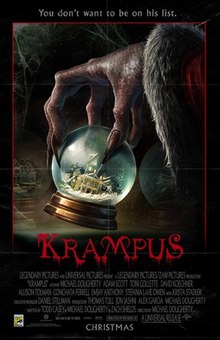
Krampus: The latest holiday horror film from the director of "Trick r Treat"

Krampus:
It's the modern holiday seasons: an upper middle-class family is reluctantly having their obnoxious redneck in-laws over for Christmas. Hijinks ensue, resulting in the youngest son taking back his Christmas wish for his family to better themselves. Suddenly, an intense blizzard knocks out the neighborhood's power and prevents road travel. Very quickly, the family begins to realize that a supernatural force is tampering with their lives: the Krampus, the ancient German demon who comes to punish those who do not embrace the Christmas spirit.
    I've found the legend of the Krampus fascinating for a while now. The irony of this dark and morbid story being told to children around the happiest season of the year was intriguing to me. So when I heard Michael Dougherty (director of the Halloween horror film Trick r Treat) was doing a film about a family who encounters this creature, I was hyped. Initially the trailers were very dumb, but I was confident it would be a fun little movie. And it was. Slightly disappointing, considering how great Dougherty's first effort was, but still enjoyable.
    The humor of the film blends with the horror surprisingly well, and Adam Scott, Toni Collette, Allison Tolman, David Koechner, and Conchata Ferrell were great comic relief in the film, and while initially seeming very unlikable, slowly start to grow on you as the survival portion of the film sets in. Krista Stadler, Emjay Anthony, and Stefania LaVie Owen were good supporting characters, playing the grandmother and two kids, respectively. Some reviewers complained the family was unlikable for the most part, but I found myself sympathizing them more and more as the film went on, and I believe that was Dougherty's intention. However, characters often make dumb, horror movie mistakes, but the tongue-in-cheek nature of the film makes this more understandable.
    Krampus himself takes a backseat most of this movie, which was slightly disappointing, but also built suspense to his eventual arrival. His design was pretty great in this movie, paying homage to traditional portrayals, while trying its' own thing. The special effects of the monsters in this film were fantastic, mostly practical effects, though at times the effect of the Jack-in-the-Box creature looked like a Power Rangers monster suit, and one key scene of a character falling was laughable looking and almost ruins the climax. There is, however, a short clay-mation/CG sequence that looks amazing and shows Dougherty hasn't forgotten his background in animation.
    The story at times had holes (how much of the town Krampus' snowstorm has enveloped is unclear), and the ending (as Chris Stuckmann pointed out in his review) felt a little too similar to the ending of Jeepers Creepers. The jump scares felt a little cheap, and I know from watching Trick r Treat that Dougherty can do better, and overall you can tell he wasn't having as much fun with the Christmas horror concept as with the Halloween one. In fact, the PG-13 rating seems to drag down this project with its' obviously censored dialogue ("Get away from my kids, you fudger!") and lack of blood. I'm all for "what you see is less scary that what you don't", but with a big, dumb, in-your-face monster movie like this, some gore would be a good payoff but I never got that. Trick r Treat was rated R, and therefore went all-out with the gore and was better for it. 
    The film felt longer than it was, but that's a good thing. It felt like a solid length for this type of movie. Krampus is an entertaining movie, albeit a slight let-down. Best case scenario: it encourages more viewers to check out Dougherty's Trick r Treat, which, unlike this film, was given a criminally limited theatrical run and then went straight to video and on demand for vague reasons, despite having a good budget and cast. Worst case scenario: it disappoints people and discourages them from watching ore of Dougherty's horror films, which would be a shame, as Dougherty is a talented filmmaker who should branch out and do more work outside of just writing. Give this one a watch, and then go out and buy Trick r Treat for next Halloween (or just watch it now, it doesn't matter). 7/10 stars.

Krampus poster.jpg                                     

(Images: Wikipedia, comingsoon.net)

Saturday, October 31, 2015

Crimson Peak: del Toro's visual feast unfortunately lacks substance

Today, another review of a Halloween film out in October.

Crimson Peak:
Aspiring young author Edith is the daughter of a successful businessman in Buffalo, New York. She is courted and wooed by the mysterious baronet Sir Thomas Sharpe, and his sister Lucille, and she is married to him and taken to his England estate. However, Edith can also see ghosts, and they begin to warn her of a place called "Crimson Peak". Edith tries to forget these warnings, but as her new husband and sister-in-law grow increasingly distant and suspicious, and these nightly ghost appearances grow more frightening, she realizes there may be more to this estate and her new husband.
    Guillermo del Toro, whatever one's opinion of him is, cannot be denied to have a keen visual eye. He is a master of lighting, impressive sets and costumes, and of cinematography. The look of this film evokes memories of Hammer Horror and Bram Stoker's Dracula from 1992. It even matches the idea from those films of having romance take priority over the horror aspects. However, in terms of quality, this film comes nowhere close to those. The primary color palate is green, red, and black, which is funny, considering there's a scene which talks about color blindness and its' lack of reds and greens, almost acknowledging that people with color blindness will not fully see the best part of this movie: the imagery.
    The special effects are pretty good, even if the CG is overutilized. Some of the ghosts are menacing, others feel a little silly.
    Mia Wasikowska is a decent lead, but feels a little wooden at times. Tom Hiddleston, while good to see him get away from the Loki character, starts strong but slowly his character becomes way too  predictable. Jessica Chastain is laughably over-the-top evil, and there's, again, no mystery for her character despite the film supposedly being a mystery. She's obviously a villain from the start. Charlie Hunnam, Burn Gorman, and Jim Beaver are strong supporting characters, even if they are, also, pretty cliched. Doug Jones has some roles as ghosts in the film. It's cool to see del Toro still casting his buddies in small parts when the part fits them.
    The plot starts pretty strong, and the first half was investing. But the middle tries to build slow tension, but ultimately feels like it just drags on, as it quickly becomes evident of what's going on. The climax packs in a completely cliched and predictable twist, but the final confrontation is entertaining, if not exactly scary. There's some brutal kills/attempted kills in the movie that just look like they hurt and make you cringe. Guillermo always seems to pull off those moments better than most directors, at least in the mainstream. One particular stab had one man in my theater screaming "Jesus Christ!" completely out loud in my small, and mostly empty screening.
    Crimson Peak isn't exactly what I would call a scary, or even really suspenseful movie, bu it's a solid and mostly entertaining one with some chilling imagery and excellent period sets, costumes, and vibrant colors. There's some pretty violent scenes at the beginning and the end to keep things from getting too dull and to keep the stakes high, but ultimately, this isn't as good as del Toro can be. 6/10 stars.

Edit- November 11, 2015: the ghosts in the film were accomplished using mostly practical effects, not CGI as I had thought, though they look like it.

Crimson Peak theatrical poster.jpg                                                         (Image: Wikipedia)

Goosebumps: R.L. Stine's children's series finally gets the big screen treatment

For Halloween, I figured I'd review two new horror movies I saw. Well, this isn't much of a horror film, but is a perfect fit for the Halloween season.

Goosebumps:
Shortly after moving into a small town in Delaware, teenaged Zach becomes infatuated with his next door neighbor Hannah. However, Hannah's mysterious and reclusive father doesn't want Zach around and warns him about leaving them alone. One night, Zach and his new friend Champ break into the home, thinking Hannah is in danger from her father. They discover her father is author R.L. Stine, who has every Goosebumps manuscript locked in his study. Upon opening one of the books, they discover opening them unleashes the monster from each book upon the world. Unfortunately, they unleash Slappy the Dummy, who begins opening and then destroying the manuscripts, preventing the monsters from being contained. With every monster Stine ever created wreaking havoc on the town, Zach, Hannah, Champ, and Stine must find a way to stop the monsters and recapture them before they destroy the town and move on to the rest of the world.
    Now, despite being a fan of the books and TV show as a kid and therefore having a nostalgia for it, I find them to be just ok now. The books are leagues above the TV show, which is downright hilarious most of the time. Now, this movie didn't blow my expectations out of the water or anything. It was exactly as good as I expected it to be. Jack Black was decent as Stine and had some funny moments, and Amy Ryan and Jillian Bell were good supporting actresses. Black also voices Slappy. The main three kids, played by Dylan Minnette, Odeya Rush, and Ryan Lee, were decent leads and I think kids will enjoy them. R.L. Stine has a little cameo near the end as Mr. Black (get it? Because Jack Black plays him in the movie? Yeah, nothing too clever there.)
   But about the kids, I think that's the best way to view this movie: remember that it really is made for kids. However, because of this it still can't be fully enjoyed by me. One of the worst parts was as nice as the huge monster fight at the climax was, it was way too tame. The Cabin in the Woods had a similar sequence, but because it was rated R, it could go all out with the violence and it was awesome. This movie keeps it PG and therefore the violence is comical and no one ever feels in genuine danger, and the monsters never get to do anything truly scary, and Stine's insistence about not having death in his books keeps the movie from having any balls. Also, there's a reveal in this film that provided the opportunity to really have kids face the reality of death in a mature fashion, and it almost did, and then they soil it with a forced happy ending. The ending "twist" also makes little sense at all. The scariest monsters are the zombies which are just slightly creepy, and Slappy's weird thing about him and Stine being one in the same made no sense to me and seemed like trying to force more of a relationship between the two into the movie. The best part of the movie is the credits sequence whose animation style mimics that of the Goosebumps book cover art. It was really a treat to see.
    Goosebumps captures the spirit of the original books, and is leagues better than that 90's TV show (at least in terms of quality; funny wise, it doesn't hold a candle). The cast is good, the special effects are hit-or-miss (Slappy being a real dummy was cool, but some of the CG was so-so), and the story was a clever way to work in all the monsters from the books in one place. It's definitely the perfect Halloween movie for families to go see. 6/10 stars.

Goosebumps (film) poster.jpg                                                                  (Image: Wikipedia)

Saturday, October 24, 2015

September Movies: The Visit and Black Mass

Today, I look at two movies I've seen recently.

The Visit:
Two young kids, a pretentious teenaged girl who likes making movies, and an idiotic boy who thinks he's a rapper, go for a week to visit their estranged grandparents and reconnect with them. However, spending more time with them, they realize something is very wrong with their grandparents...
    M. Night Shyamalan has been the laughingstock of Hollywood for the past ten years. A pariah, who is despised by critics, and whose fans have even grown tired of his constant churning out of garbage. Suddenly, this film, which looked ridiculous and stupid, was getting good reviews. People were saying he was turning his career around at last. I went in knowing this movie would be bad. No matter what people said, I knew it, deep down. And it was gloriously bad. It's supposed to be this found footage horror comedy, but the parts that I could tell were supposed to be scary were hilarious, and the parts that were supposed to be funny just cringey and awkward.
    The found footage angle doesn't work at all because it's essentially unnecessary except for budgetary reasons. There's still opening credits despite the "real" style, and the equipment being used by the main character is way too good for a teenage girl to have. The camerawork is so crisp and clear, it's like a professional camera. And the webcams being pretty much perfect, with no delay or bad audio is another pet peeve of mine as of late.
    Olivia DeJonge and Ed Oxenbould are the two annoying main characters. The girl spouts movie equipment explanations and terms to the audience like we're stupid and talks in an incredibly condescending voice. The boy is just plain irritating. I do admire the two actors, who are Australian, putting on such convincing American accents, but the material they were given is just awkward. Peter McRobbie and Deanna Dunagan play their grandparents, who are some great scenery-chewing villains. They are without a doubt the best part of the whole movie. Kathryn Hahn appears as the kids' mother, who is fine, but for a found footage movie, it's distracting to see such a recognizable face.
   The Visit is packed with jump-scares and unintentionally hilarious moments (grandpa's poop is used as a plot point and a scare), and is just painfully awkward at times in a way only Shyamalan can do. While I was thoroughly entertained, I feel it was still a failure as a horror-comedy, and should be seen as an all-around comedy. The only remotely suspenseful scene is the final confrontations with the grandparents, which are ruined by a poop scare and with a callback to football earlier in the movie that is absurdly forced. Overall, see it if you want a good laugh, or put it on at a Halloween party. This movie is a prime example that these day, Blumhouse will produce anything to make a quick buck. 5/10 stars.

The Visit (2015 film) poster.jpg


Black Mass:
Telling the story of infamous Boston gangster James "Whitey" Bulger (a criminal whose exploits have inspired many other films), this movie follows his rise to power, family struggles, and the controversial alliance between Bulger and the FBI.
    Johnny Depp has been in a bit of a career rut lately. Being typecast as the eccentric oddball for the past twenty-or-so years hasn't helped. In this movie, he gets to actually be an actor again by portraying a character who is different than is others, who has a semblance of depth to him. His portrayal of Bulger is the crowning achievement of the film. He's empathetic at times, but is mostly cold, intimidating, and other times, disgusting and skeevy. The makeup job on him was excellent, with some subtle touches like a bad tooth and pock marks, and more noticeable ones like his receding hairline and icy blue eyes. Johnny still looks a little too handsome to be the real life Whitey (who had big teeth and looked much older), but his performance makes up for it.
    The rest of the cast do a fine job. It's too lengthy to list all here, but I will say Joel Edgerton was a good tragic hero character, who had moments of idiocy.
    My main problem with the movie was its' often repetitive nature (if Bulger is alone with someone or with just him and his guys and someone else, it's a guarantee that he's going to either kill them or do something creepy, it's like a formula). There's also no suspense in certain scenes after awhile because you can predict how it's going to end based on the information above, plus obvious music cues, so it's not great a suspense thriller. Even as Bulger story, it's a lot more boring than most. The Departed has more leeway because it was a fictional story, so they could do more with the story to make it more investing, but here, it's all facts, so after awhile it gets quite dry. The first act definitely felt more intriguing and fast-paced than the second, which dragged its' feet too much.
    Some of the camera angle choices were cool (in one death scene, they pan away to leave it kind of unclear what exactly was done, which was somewhat unique.
    I know it's the title of the book this was based on, but I don't know exactly why they decided to call this film "Black Mass". I mean, it's an eye-catching title, but it really has nothing to do with the film's content.
    Regardless, Black Mass is a decent gangster biopic, but nothing to write home about. It's essentially a straightforward telling, with little visual flair. I was disappointed, because director Scott Cooper has had a fairly good track record. Depp's performance may be enough to save this movie from pure mediocrity, but it's nothing compared to the other films based on Bulger's life. It's also a  bummer when the dinner scene from the first trailer was done better in that trailer than in the actual film. 6/10 stars.

Black Mass (film) poster.jpg                                                                (Images: Wikipedia)

Sinister 2: I don't even know what to say

This is a long-belated review because I honestly just had to gather my thoughts.

(Spoilers for "Sinister")


Sinister 2:
Some time after the conclusion of the first film, the young deputy from that film is traveling the United States, trying to destroy the demonic influence of Bughuul. However, after discovering a single mother and her two boys have moved into one of the houses where Bughuul killed a family, he realizes he must protect this family from the evil forces ready to consume them.
    Now, I saw this film opening night, and, being a fan of the first film, was quite excited for it. I was growing more and more skeptical of the trailers as the date approached, but I went with my friend with an open mind. I was absolutely bedazzled by this film's ability to fuck up the mythology of a character and just general common sense in regards to character behavior. I won't go into too much detail, I am planning on making a more elaborate video review one day, because literally to explain the wrong that is this movie would require breaking down almost every single scene.
    James Ransone is a criminally underrated actor, so it was sad to see him trying so hard in this movie, and being dragged down in this mess. Shannyn Sossamon did a fair job with the material, but her and Ransone's romance was highly predictable if you've seen any movie ever. The two boys in the film are pretty bad. One is bland, the other is tongue-in-cheek pure evil, which is odd considering how normal he was at the start of the movie. Tate Ellington and John Beasley have small roles, and Lea Coco has one of the most gloriously over-the-top douchebag dad roles in cinema history. I mean, Jesus Christ, the lack of nuance is kind of an art in itself with this guy. Lucas Jade Zumann is amusing as Milo, one of the evil ghost kids in the movie. He's like a mini-Bond villain, he's so hammy.
    The scares in the movie are all cheap, pandering jump scares, and there's no real build-up or genuine sense of dread like there was in the first film. This movie's soundtrack is even subpar in comparison, using blander tracks or just recycling music from the previous film.
    The biggest problem with the movie is the Super 8 films. The concept of the kids killing their own families was already a slight stretch, but the amount of reality bending in this film is absurd. I know Scott Derrickson and C. Robert Cargill have defended jump scares before, but their overuse in the film borderlines on self-parody.
    Speaking of overuse, Bughuul himself is way overexposed in this one, having no longer a sense of terror surrounding his sporadic appearances. Here, he's everywhere constantly. And the lighting they chose really emphasizes the ridiculousness of his attire, whereas the original kept him shrouded in shadow.
    The deaths are also far too elaborate this time around. Much like a slasher sequel, it suffers from focusing too much on having cool-looking kills, without keeping in mind realism, or actually being scary.
    There was no mystique this time around because we, as an audience, already know Bughuul exists and that the kids are killing their families. There's no longer a sense of a mystery killer. I can't even believe this was written by the same people.
    This is not, in any sense, a scary movie. However, if you enjoy some unintentionally hilarious lines and ridiculously overblown death scenes, as well as some light melodrama, this is a film for you. As bad as it is, and as much as it soils the name of the original film (a film I really enjoyed), it is an extremely entertaining movie, a movie me and my friend have quoted and referenced since it came out. Sinister 2 is a disaster of a horror film, but still can be appreciated for the silly dark comedy it turned out to be. 5/10 stars.

Sinister2Poster.jpg                                                                     (Image: Wikipedia)

Sunday, September 27, 2015

Top 25 Horror Films of the 1970s: Arguably the greatest decade for revolutionary horror cinema

Because October is right around the corner, I figured I'd begin counting down my top horror films per decade once more. I wanted to get more done last year but ran out of time. This year, I'm hoping to reach at least the 2000's.

Criteria:
Must be a film produced between 1970 and 1979
Must be a horror film, thriller, or have horror-related subject matter

As always, a little backstory...
The Seventies were a decade, much like the Sixties, of revolution. After the Manson murders in Southern California, the American public was exposed to violence never thought of before. The ensuing media circus surrounding the trial of Charles Manson and his associates prompted a new fixation on cults and serial killers. Soon, the macabre and sick exploits of Jeffrey Dahmer, Son of Sam, Ted Bundy, and John Wayne Gacy became subjects of national interest and analysis. The Vietnam War drew to a close, with many veterans returning home mentally and physically destroyed by the countless horrors they had witnessed, which only strengthened the anti-war movement which grew ever-strong in the country. The deaths of John F. Kennedy, Martin Luther King, Jr., and Malcolm X the previous decade had made those men martyrs in the eyes of their followers, and had spurned an even more radical counter-culture ideology that was adopted by young college and high school students.
    These events had the opposite effect on new horror cinema as past events did on old horror. When the Great Depression and World War II hit, people sought movies, especially the fantastical Golden Age horror films, to escape from their real-world troubles. However, now, in this new age of cinema, people went to the cinemas to be faced with troubling questions about the state of the world. New, young filmmakers such as Martin Scorsese, William Friedkin, George Lucas, Steven Spielberg, and Francis Ford Coppola were rising in the film-making world, breaking the rules of Hollywood and producing some critically acclaimed and high-grossing work such as The Godfather, American Graffiti, The French Connection, Duel, Mean Streets, Taxi Driver, Jaws, and Star Wars, a lot of which had more violence and moral ambiguity than was allowed in most major studio fare. Jaws and Star Wars became the first films that were referred to commonly as "blockbusters," setting a new trend in Hollywood.
   On the seedier end of the independent movie scene were young, fledgling directors like Brian De Palma, George A. Romero, Wes Craven, John Carpenter, Dan O'Bannon, Tobe Hooper, and Sean S. Cunningham, These men were lovers of film who were raised (at least mostly) on a diet of Universal monster movies, Hammer horror, Hitchcock, and 50's sci-fi schlock. Taking what they loved about the classic horror genre while adding the brutality and violence so present in Seventies culture made for a potent mix that produced some of the best films ever made. By the end of the decade, Carpenter's Halloween reinvented the entire horror genre and spurned forth (arguably) its' most popular sub-genre: the slasher film...

The List:

25. Blacula (1972): This blaxploitation horror film may sound funny on paper, but is actually fairly effective. William Marshall is charismatic in the titular role, and while the plot isn't all that deep, it's pretty good for a cheaply made exploitation movie.

POSTER - BLACULA.jpg

24. Magic (1978): This psychological horror film further popularized the killer doll genre of movies. While it borrows much from previous "killer ventriloquist dummy" media like episodes of The Twilight Zone and the film Dead of Night, it infused a mystery element and was made by a stellar production team: director Richard Attenborough, and a cast featuring Anthony Hopkins, Ann-Margaret, Burgess Meredith, and Ed Lauter elevate this film above the general cheesy killer pupper fare.
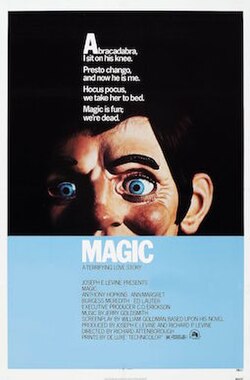
Magicposter.jpg

23. Valerie and Her Week of Wonders (1970): This surreal and bizarre Czech film is a twisted fairy tale chronicling a young girl named Valerie's encounters with a thief, a masked monster, and a priest, among other things. A dreamlike film that's almost reminiscent of David Lynch, it packs in some weird and unsettling imagery that sticks with the viewer, and is a great example of an exercise in surrealist horror.

4467 print2.jpg

22. Deathdream (1974): Bob Clark may be best known today for directing A Christmas Story and Murder By Decree, but in the 70's, he was an independent horror film director. And a good one, at that. His films were ahead of their time, and dark and brutally violent, and, best of all, genuinely unnerving. This film was a commentary on the Vietnam War's effects on the folks back home, as well as a quasi-adaptation of the W.W. Jacobs short story "The Monkey's Paw".

Deathdream.jpg

21. The Abominable Dr. Phibes (1971): This Vincent Price vehicle came late in his career, but was successful enough to spawn a sequel. A classic revenge story set around the Ten Plagues of Egypt, the film sees Price once again play a disfigured genius driven mad and fueled by vengeful rage. The kills in the film push the boundaries of believability, but are unique and memorable. A campy and often neglected entry in the horror genre, it's one of Price's better films.

Abominablephibes1.jpg

20. Nosferatu the Vampyre (1979): Werner Herzog's artful remake of the 1922 classic silent film stars Klaus Kinski in the titular role. Shot in both English and German, this film continues in the trend of Herzog and Kinski's partnership, it is a vivid and beautiful film to look at, and Kinski is perfect as Nosferatu. Despite the allegations of animal cruelty and abuse on the set, which Herzog apparently neglected, the movie is still an immensely enjoyable revamp (no pun intended), and one of the few remakes that is on par with its' source material.

Nosferatu Phantom der Nacht.jpg

19. Phantasm (1979): This bizarre and eerie supernatural thriller was a locally financed indie film that wound up spawning a string of sequels, and cementing Angus Scrimm's Tall Man character as an icon of the horror genre. With some nightmarish visuals, unconventional structure, and an imposing boogeyman figure as the villain, Phantasm is one of the more underrated 70's horror films.
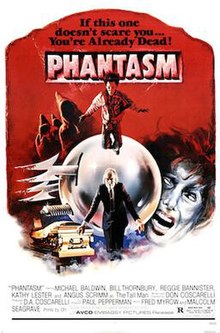
A woman screams and covers her eyes, which are then superimposed over her hands

18. The Brood (1979): David Cronenberg's body horror film serves as a metaphor for feminine empowerment gone awry and as an interesting look at messy divorces, and asks an interesting question: if we could actually manifest those negative emotions we feel towards others, could it wind up controlling us? The shocking and cringe-inducing imagery and nasty special effects paired with those messages part of what Cronenberg does so well: make us think, and make us squirm, often at the same time.

Thebrood.jpg

17. Alice, Sweet Alice (1976): Featuring Brooke Shields in her film debut, this slasher film is a cut above the rest. This mostly owes to the exceptionally creepy and haunting mask worn by the killer, a translucent mask highlighted with drag queen-esque makeup. The film was released three times under three different titles: as Communion at the Chicago International Film Festival in 1976, theatrically in 1978 under this title, and a third time in 1981 as Holy Terror to capitalize on Brooke Shields' growing popularity. While borrowing from many previous films, most notably the raincoat motif from Don't Look Now, this movie stands on its' own as one of the more genuinely scary of the slasher films, and one that predates Halloween. And speaking of Don't Look Now...

Alice Sweet Alice.png

16. Don't Look Now (1973): A startling thriller about psychic powers, serial killers, and ghost girls, the film, much like many 70's horror films, took elements that made old horror films so great, updated them for modern adult audiences, and were being made by some bigger names in the film industry. This one stars Donald Sutherland and Julie Christie, two major stars, and was directed by the acclaimed Nicolas Roeg. This movie has some visually striking images, and one of the best (and most unexpected) twist endings ever.

Dont look movieposter.jpg

15. Black Christmas (1974): Bob Clark shows up again on this list with his dark precursor to A Christmas Story. A brutal and dreamlike film with a mysterious killer, it set a trend for slasher films, and reportedly this was one of the films that inspired John Carpenter's Halloween, as the planned sequel for this film would have taken place on that holiday. The camera angles, opening shot, and violent kills set the stage for Halloween, though this film is even darker, bloodier and more vulgar than that film was. The film has future stars like Olivia Hussey, Andrea Martin, Margot Kidder, and John Saxon, and 2001 star Keir Dullea. The unsolved identity of the killer makes the film unsettling as it leaves so many doors open, and the killer's weird, gender-neutral voice is chilling and sticks in your head.

Black christmas movie poster.jpg

14. The Hills Have Eyes (1977): Wes Craven's second major horror movie was stars future E.T. star Dee Wallace and is a brutal and unapologetic film that chronicles one family's struggle for survival against an inbred family of feral cannibals. Michael Berryman (the man on the poster) was shot to B-movie stardom for his unique physical appearance and imposing performance. The film was successful enough to spawn a sequel and a remake and its' sequel. The movie also further popularized the 70's sub-genre of middle-America family vs. group of deranged killers, and also popularized the feral cannibal sub-genre.

Hillshaveeyesposter.jpg

13. Invasion of the Body Snatchers (1978): This remake of the 1950's classic by Philip Kaufman stars Donald Sutherland, Leonard Nimoy, Brooke Adams,Veronica Cartwright, and Jeff Goldblum. Managing to be just as memorable as the original in its' own way, with surreal, 70's acid-trip imagery and a harrowing twist ending, this movie also has a much more graphic and nasty pod people transformation process and the logic behind the transformations is actually an improvement over the original, which had a plot hole in that area. While not as iconic or important as the original, this reimagining is definitely one of the best remakes of all time.

Invasion of the body snatchers movie poster 1978.jpg

12. The Wicker Man (1973): This dark occult mystery film pits a devoutly Christian police detective against an underground pagan cult. Christopher Lee's performance as the villain Lord Summersisle is one of his more underrated, and the cast, featuring Edward Woodward, Ingrid Pitt, Diane Cilento, and Britt Ekland. It has some great suspense, an interesting soundtrack, a compelling mystery that slowly spirals into a much larger conspiracy, and has a fantastic and horrific ending reveal. The hilarious 2006 remake starring Nicolas Cage is only entertaining on an ironic level, and can't hold a candle to the original.
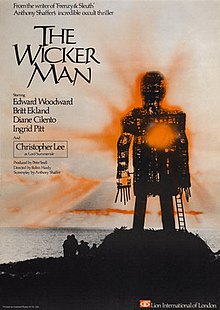
The Wicker Man (1973 film) UK poster.jpg

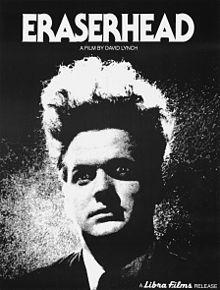
11. Eraserhead (1977): David Lynch's first feature is one of the most nightmarish and stomach-churning movies ever made. The bizarre and uniquely nasty imagery, industrial location and soundtrack, dreamlike narrative, and creepy and odd characters set the standard for Lynch films: symbolic and weird movies that creep under your skin.
Eraserhead.jpg

10. The Last House on the Left (1972): A brutal and sickening revenge thriller, produced by Sean S. Cunningham and directed by Wes Craven in his debut film, the movie serves a warning about the consequences of revenge. Reflecting the horrific side of the Love Generations showcased by the Manson murders, this grindhouse exploitation film features some of the most brutal violence seen at the time. The violence was enough to get it banned in several countries and cause a lot of controversy upon release. But it is this violence that assaults the viewer and makes them ponder the consequences of it in the real world. Many people mistake this movie for glorifying or sexualizing violence, when it is doing the exact opposite, it is a warning against violence, unlike the 2009 remake, which ends on a slightly happy note and glorifies the revenge sequence at the end of the film as justified.

LastHousePoster.jpg

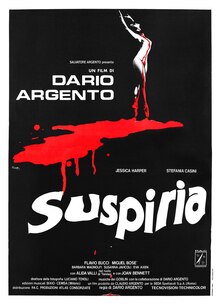
9. Suspiria (1977): Dario Argento's stylish Italian giallo movie is one of the most beautiful and colorful horror films to look at. Part of his "Three Mothers" trilogy, this movie is famous for its' beautiful cinematography, vivid color palates, and almost fairy tale-esque plot. The score by prog-rock band Goblin is excellent, and set a trend for prog-rock and synth bands composing scores for horror and sci-fi films during the 1980's.
SuspiriaItaly.jpg

8. Carrie (1976): Based on Stephen King's bestselling 1974 novel, Brian DePalma's masterful adaptation darkened the ending and provided some great cinematography and suspenseful sequences. The climactic dance scene is taut and has the viewer on the edge of their seat, until the moment when all hell breaks loose and Carrie has her brutal revenge on all those who wronged her (and some who didn't). Sissy Spacek and Piper Laurie both had Oscar-nominated performances, Spacek for her role as the timid and emotionally troubled teenage girl, and Laurie as her psychotic and domineering Christian mother. Nancy Allen and John Travolta also appear in the film, another case of future A-listers appearing in smaller projects. The relationship between Carrie and her mother is tragic, symbiotic, and cringe-worthy to watch, and is the dramatic backbone of the movie. The first Stephen King movie adaptation was also based on his first novel, and kick-started a string of over 100 adaptations of his various works.

Carrieposter.jpg

7. The Omen (1976): Richard Donner and David Seltzer's Satanic thriller has a moody and atmospheric score, great lead performances by Gregory Peck, Lee Remick, and David Warner, and one of the best "creepy kid" performances by Harvey Spencer Stephens. The mystery surrounding the boy continues to unravel in unexpected ways, and the film masterfully builds to a crescendo where our leads desperately try to stop the horrible force that is Damien. However, unlike The Exorcist, The Omen leaves an a much more ominous and foreboding ending, with no comforting happy ending to be had.

Omen ver4.jpg

6. Alien (1979): Dan O'Bannon's script and Ridley Scott's eye of visuals combine to create the greatest of the sci-fi horror movies. H.R. Giger's phallic and iconic creature design and disturbing art style contribute to much of the film's look. The lead performances by Sigourney Weaver, John Hurt, Tom Skerritt, Veronica Cartwright, and Henry Dean Stanton are phenomenal, particularly Weaver's turn as Ellen Ripley, one of the most bad-ass female leads of all time. The effective use of long tracking shots, false scares, and long periods of suspense and build-up make Alien just as much a Gothic horror/slasher film as it is a sci-fi thriller. And although it borrows a lot from the 1950's film It! The Terror from Beyond Space, it also contributed enough original visuals and scares (chest-burster scene) to be its' own film.

A large egg-shaped object that is cracked and emits a yellowish light hovers in mid-air against a black background and above a waffle-like floor. The title "ALIEN" appears in block letters above the egg, and just below it in smaller type appears the tagline "in space no one can hear you scream".

5. Dawn of the Dead (1978): George A. Romero's follow-up to his 1968 Night of the Living Dead is is color and cranks up the gore and returns to his social commentary. Instead of being about race relations, it's about mall culture turning Americans into zombies. The leads, including Ken Foree, are great and the set-pieces, especially the final sequence where the survivors must face off against both a biker gang and a horde of incoming zombies is spectacular. It surpasses the original in every conceivable way, and although it has a happier ending (the original cut of the film had a much more somber end), it is a darker film than its' predecessor. It also has one of the best lines/taglines in horror history: "When there's no more room in Hell, the dead walk the Earth."

 Painted theatrical release that includes various credits, an ominous zombie looking over the horizon, and the words "Dawn of the Dead" in military print below.

4. The Texas Chain Saw Massacre (1974): Made on a shoe-string budget with a cast of unknowns (mostly Texas natives), Tobe Hooper's grimy and nasty grindhouse film introduced the world to slasher icon Leatherface and his family of deranged cannibals. A film that remains discomforting today due to its' improvised, documentary-style feel and savage violence (most of which is off-screen and implied, leaving it to the viewers' imagination), it also inspired many modern filmmakers, including Peter Jackson, and was a forerunner of the slasher genre. Gunnar Hansen remains the best Leatherface, mostly due to his convincing portrayal that doesn't make him totally sympathetic like the remake tries, but also reminds us that he, too, is human and has good traits (cares for his family's well-being), but also constantly reminds us that he is a force to be reckoned with. His mask seems more authentic than the remake's as well, further creating this weird blurring-the-lines effect where one can't be sure what they are seeing is staged or not. The other actors, including Ed Neal, are so good at portraying demented killers that one could almost be convinced Hooper just cast real crazy people in his movie.

A white film poster of a man holding a large chainsaw, with a screaming woman fastened to a wall behind him. The writing on the poster says, "Who will survive and what will be left of them?"; "America's most bizarre and brutal crimes!"; "The Texas Chainsaw Massacre"; "What happened is true. Now the motion picture that's just as real. "

3. Jaws (1975): Steven Spielberg's innovative blockbuster film faced numerous production problems, resulting in a malfunctioning mechanical shark on set. Due to this, the shark was used more sparingly than Spielberg had hoped, but this led to the team mostly using POV shots of the shark, and because the shark only appeared on screen briefly once in a while, it built up incredible suspense to when it would next appear. With John Williams' iconic and slow-building main theme scoring the film and some great performances by Roy Scheider, Richard Dreyfuss, and Robert Shaw (especially Shaw, who plays the memorable Quint, who gives a chilling monologue about shark eyes), this adventure-thriller based on Peter Benchley's novel remains one of the top 20 films ever made.

Movie poster shows a woman in the ocean swimming to the right. Below her is a large shark, and only its head and open mouth with teeth can be seen. Within the image is the film's title and above it in a surrounding black background is the phrase "The terrifying motion picture from the terrifying No. 1 best seller." The bottom of the image details the starring actors and lists credits and the MPAA rating.

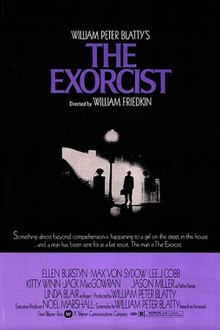
2. The Exorcist (1973): William Friedkin's adaptation of William Peter Blatty's demonic possession horror novel (which in turn was based of a reportedly true story) caused mass waves of controversy upon release. Christian groups claimed it was possessed by Lucifer himself, while most of the general public ran screaming from the theater upon seeing it. The special effects by Dick Smith were revolutionary and still look convincing today. The vulgar language, disgusting imagery, and frightening voice of Mercedes McCambridge as possessed Reagan are what make the film so memorable and terrifying to this day. It was the first horror film nominated for Best Picture at the Oscars, and it is led by a stellar cast, featuring Ellen Burstyn, Linda Blair (doing a great performance for a child actress), Jason Miller, Lee J. Cobb, and Max Von Sydow (playing a character decades older than he actually was). The main theme from the album Tubular Bells is up there with John Carpenter's Halloween score as one of the eeriest and most ear-wormy movie themes of all time.
Exorcist ver2.jpg

1. Halloween (1978): John Carpenter's classic slasher film introduced the world to the first of the modern boogeymen (Michael Myers) and really defined the tropes of the slasher genre. It was followed by a slew of copycat films, and shot Jamie Lee Curtis (daughter of Janet Leigh) to stardom and set her "scream queen" status. The musical score, pacing, POV and tracking shots, and performances by Curtis, Donald Pleasance, and stuntman Nick Castle. The lack of gore demonstrates a great amount of restraint on Carpenter's part, and the shoestring budget was made back a hundred-fold by box office revenue and a consistent word-of-mouth campaign. It is undoubtedly the most influential of the 1970's horror films and the best slasher movie of all time.

Halloween cover.jpg

Runner-ups: Vampire Circus, Martin, The Vampire Lovers, Daughters of Darkness, Straw Dogs, I Spit on Your Grave, House (1977), Piranha!, Legend of the 7 Golden Vampires, Tourist Trap.