Showing posts with label sci-fi. Show all posts

Monday, September 12, 2016

Lights Out and Star Trek- Beyond: July's most most mediocre offerings

Today, I look at the horror film Lights Out and the sci-fi adventure Star Trek: Beyond, in an almost pointless game of catch-up due to my ridiculous hiatus I've been taking as of late.

Lights Out:
After a number of strange and frightening occurrences, two siblings (one a 20-something punk rock girl and the other her pretty bland younger brother) begin to fear that their mother has slipped off the deep end and there is a paranormal entity hiding in the shadows of their homes, stalking them as prey and puppeting their unstable mother along.
    David F. Sandberg, a Swedish director, helms this directorial debut which was inspired by his low-budget but still effective and charmingly simple short of the same name he produced in 2013. I think it shows in this final product which has a paper-thin, predictable plot which was a little too reminiscent of The Ring at times (a film I only recently saw and felt was grossly overrated).
    Teresa Palmer was a forgettable and cardboard cutout lead character. I haven't seen much of Palmer's work but I'm sure she's fine in other things, just here she was nothing special. Alexander DiPersia was the standard supportive horror boyfriend character and Gabriel Bateman came across as a low-rent Ty Simpkins from Insidious. Bateman wasn't anything more or less expected from the genre. Maria Bello was probably better than most of the cast as the on-edge mother character though her psychosis came off as more irritating than scary. Alicia Vela-Bailey (who's gorgeous in real life, funny enough) carried a certain presence with her during her screen time as Diana, so she was the highlight of the film. Lotta Losten (the star of the original short and the director's wife) makes a cameo in the opening scene echoing the original short.
    The plot felt too brisk and repetitive, and ultimately it was just that: a run-of-the-mill genre piece that will be forgotten within a year just with an added gimmick of the "the villain only exists in the dark" plot point. They do play with that concept pretty cleverly a few times, like the use of black lights, but I felt the movie didn't deliver enough story or substance to make me enjoy those moments as much as I could have.
    Now, while I mentioned The Ring was a very overrated movie, I appreciated the visual style of the film and persistent sense of unease and dread that purveyed the film up until the somewhat mediocre climax. For Lights Out, rather than sitting in fear of the next scare, I was bored, awaiting the next cued "Boo!" moment.
    Lights Out is not a very promising directorial effort from Sandberg, which is disappointing after the hype of the short film, with bland and run-of-the-mill characters, too many conventions and not enough originality, and a misunderstanding of what made the original short scary. (For a breakdown of that, see this video: https://www.youtube.com/watch?v=EPRppNlfaX8) 4.5/5 stars.


Star Trek, Beyond:
Some time into their five-year mission, the crew of the U.S.S. Enterprise's boredom with the minutia and repetition of their day-to-day routines is interrupted when they become stranded by a strange alien attack, leading them to become separated on a mostly vacant alien world, only populated by a group of rogue creatures who have a vendetta against Starfleet.
    The first of these films to not be helmed by J.J. Abrams (who of course have moved on to Star Wars), it is instead directed by Justin Lin, known for his work on the Fast and the Furious franchise, and written by Doug Jung and cast member Simon Pegg.
    Feeling a lot more like an episode of the original show and with enough wink-winks and subtle continuity nods to make even the most hardcore fanboy's head spin, this is probably the most goofy and bland of these new films, and my least favorite, but it is by no means a bad film. It's not the best the summer had to offer, but very far from the worst.
    The cast are still very comfortable in their roles, and the bittersweet feeling of seeing Anton Yelchin on screen for the last time made me more partial to the film (one scene near the end feature a framing on Anton in the center of the frame and a line about "absent friends" that's almost chilling
considering the film was in post-production at the time of his tragic death).
    Idris Elba played a pretty bland bad guy, which was unfortunate for such a skilled actor, and one with experience in playing cold, calculating baddies (anywhere from Luther on Luther, to Stringer Bell on The Wire, to Charles Miner on The Office).  Sofia Boutella has a nice role as the supporting as the scavenger Jaylah. Joe Taslim and Lydia Wilson also appear.
    Leonard Nimoy and Yelchin are given heartwarming little tributes on this film, and they will be sorely missed in upcoming adaptations.
    The unveiling of Sulu as gay was not supported by George Takei himself and I felt it was an unnecessary PC addage to diversify an already incredibly diverse cast of characters.
    The music choices in the film felt appropriate and one final sequence set to a popular song from a previous entry was clever and fun. Ultimately, despite a few clever set-ups, most of the action had little to set it apart from the constant stream of blockbusters recently.
    Star Trek Beyond is essentially an average episode of the original series stretched out to feature length, and is a decent summer outing, but nothing more. It felt somewhat empty, so it made me sad it would be the final film of Yelchin's career. 6/10 stars.

                                                     (Images: Wikipedia)


Wednesday, June 22, 2016

X-Men- Apocalypse: A fun, albeit overblown and uneven, chapter in the never-ending franchise

Today, I look at the latest installment in the X-Men series, what I thought to be the final, but which clearly shows there is no end in sight for this saga.

X-Men, Apocalypse:
Ten years after the events of X-Men: Days of Future Past, Charles Xavier is running a successful mutant academy and mutants are becoming more integrated into society. In this new alternate timeline, Mystique is on the run, now a hero and martyr for mutant rights after her selfless acts at the conclusion of the past film. Magneto is living a quiet life under the radar in Poland as a factory worker, as he is now a wanted man for trying to kill President Nixon and destroy Washington, D.C. During this time of peace, a cult in Cairo, Egypt awakens the ancient mutant Apocalypse, the world's first, who is all-powerful. Quickly learning of man's history and capacity for destructions, as well as the creation of their own "superpowers" (nuclear weapons, technological advancements), Apocalypse decides to recruit four followers (his "Horsemen") and imbue them with advanced abilities, and plans to cleanse the Earth of those who he views as weak and unfit to live in the same world as him. With the help of CIA agent Moira MacTaggert (Xavier's old flame), the retired X-Men must find a way to stop Apocalypse from tearing the world apart.
    One thing I appreciated right off the bat with this film was the alternate timeline plot that Days of Future Past allowed. Now that the original series of films has been annulled, the series can proceed down numerous new paths without worrying about getting tangled up in continuity (though there's still some here, such as the age of the character Angel not fitting with either timeline).
     One thing I found laughable was the lack of aging on characters. Now, obviously the actors haven't aged, but the makeup team didn't even attempt to make them look older. They already clarified Mystique ages slowly so that doesn't bother me much. More like Beast, Moira, Xavier, Havok, Magneto, etc. all looking roughly the same age they did in First Class, which took place 20 years prior to this one. Apparently if you just make Magneto more unshaven and slap mullets on Havok and Xavier that equals aging. Even Quicksilver hasn't aged at all. Being a teenager/college-aged in the previous film made him living in his mom's basement plausible, but ten years later?!! With his abilities he never thought to go out and make a name for himself or do something? His mom (also the same as she was before) never bothered him about this? He even acknowledges, jokingly, what a loser he is and how nothing has changed in his life. Why? Because people like young, fun, carefree Quicksilver. (They also never clarify how or why exactly Magneto ended up with his mom, who just seems way below Magneto's league. Of course, their fling happened years prior, as Magneot is Quicksilver's father, so maybe they just make her look older and drained.)
    These ages lead to problems with the age of Havok compared to his brother Scott. Scott/Cyclops is in his late teens in this film, whereas Havok looks a few years older, but really should be middle-aged by this point, making their parents elderly, but they look to be in their 50's. Just issues like that got in the way for me.
     I think Jennifer Lawrence is a fine actress, but she just doesn't do it for me as Mystique. I think she's got the look right, and certain scenes work, but her youth makes some of the speeches she gives come off as naive, cringey, and undeserved. And her new status as a freedom fighter seems completely out-of-character (Mystique in the comics and original timeline is a cold-blooded killer and her original movie counterpart rarely speaks even), and kind of political. I don't think anyone is deluding themselves that Mystique has only gotten a larger role due to Lawrence's current mega-star status. Luckily, she's downplayed in this movie compared to last time (where she was the instigator of the entire plot and was placed the same size as Wolverine on the poster), but still has more screen time than the character would've had otherwise.
    The rest of the cast are a lot of fun, and just seem to be having a great time doing these movies. Michael Fassbender and James McAvoy both have their more dramatic moments, particularly Fassbender, who is able to bring a lot of emotional weight and grounds the film more in reality. Where Ian McKellen made Magneto both charming and very intimidating and shifty, Fassbender humanizes him and makes him more tragic, as if every time he tries to leave his violent past behind him and live a normal life, violence seems to find him.
    Sophie Turner is good as Jean Grey, though at times her character feels like her role on Game of Thrones. Luckily, her character her is nowhere near as aggravatingly naive and arrogant as her part on the HBO series has become, and has more of a genuinely powerful feel to her. Tye Sheridan also does a surprisingly great job as young Cyclops, who gets more development here than he did in any of the original films (poor James Marsden). Kodi Smit-McPhee was great as the partial comic relief Nightcrawler, who has been sorely absent from the series since Alan Cumming's fantastic portrayal in X2. However, of course the shining star of the cast is Evan Peters as Quicksilver. Taking one of the X-Men I was most aloof about in other media and making him into my favorite film character is a terrific feat, and he has yet another spectacular and entertaining slow-motion sequence in this film, topping the excellent "Time in a Bottle" scene from the previous film. I wasn't expecting them to do it again, but I hope it becomes a sort of tradition as the series progresses. Peters is just having a blast, and it rubs off of me as a viewer, and he provides much-needed comic relief in a world where everyone is always just talking about mutant politics and how hard it is to be themselves. Even though his comic relief is sometimes misplaced (the dramatic low point during the second act is tainted by his goofy antics), but is so well-executed and his character so lovable I excuse it. Lucas Till returns as Havok, getting a lot more screen time than the last movie. Here, rather than being Cyclops' younger brother, he takes the part of the older, and in the limited screen time they have, they have a lot of chemistry as a believable brother pair. Rose Byrne was bland here as Moira MacTaggert, who only serves as exposition and as love interest to Xavier here. She was a lot better in First Class, where she seemed to have more to do, and Byrne is usually a good actress, so I was disappointed. Lana Condor appears in a borderline cameo role as everyone's least favorite mutant, Jubilee. Hopefully in future films she has more screen time and can change the negative perception the character has from the animated series and comics.
     As for the villainous characters, Alexandra Shipp and Ben Hardy are fine supporting characters as the troubled characters Storm and Angel, and both of these characters, in their limited development, are leagues more interesting than their counterparts in the originals. Shipp's accent is also far more convincing than Halle Berry's embarrassing attempt at one in the original X-Men. Olivia Munn reportedly gave up the role as the girlfriend in Deadpool to play Psylocke, as she felt it was a stronger female role. Psylocke is a waste of space here, just thrown in to pander to fans who have waited for her appearance in a film for decades. She has few lines of dialogue, and spends most of her time strutting and hopping around in a latex suit (fun fact: fashioned at an LA sex shop), and has one fight scene with Beast and then skulks off camera as a sequel tease. She's not a character at all, she's a plot device and piece of eye candy. It's pretty pitiful, so let's hope to a sequel to shed more light on her and flesh her out a bit more.
     Now, the big question is of the titular big bad: Apocalypse. Oscar Isaac is a fantastic performer, so he is able to create a palpable sense of menace and dread when he's on screen. His determination to kill and lack of conscience or reason makes him so terrifying, and he is definitely one of the more memorable villains in the series, alongside Ian McKellen's Magneto and Brian Cox's William Stryker. However, as many have stated before me, his motivation (at least for the most part), seems very unclear. It kind of leaves it to the audience to pick up the pieces and determine for themselves his motive. He wants to cleanse the Earth. Why? Does he see humans as weaker than he is? Does he want only strong mutants and humans to live beside? Is he upset that humans didn't progress how he wanted and are trying to replicate his power? World peace by cleansing out the bad people? All of these options seem valid. His appearance is also hilariously reminiscent of Ivan Ooze from the Mighty Morphin Power Rangers movie. So he's a weakly developed villain, but Isaac's strength as an actor makes up for it, so he's kind of a mixed bag.
     The action set-pieces in this film are, like other installments, not as prevalent as in other films, but the first few are pretty spectacular. Unfortunately, the action peaks early on with the Quicksilver scene being the midpoint climax, and there is a scene shortly after it I won't spoil with a cameo in it, but it's also really awesome and surprisingly bloody for a PG-13 film. However, the final battle, while it had moments (thanks to Quicksilver namely), didn't do it for me overall. I felt it was kind of schlocky and too CG-heavy. I felt the films were at their best when they had more reserved, personal climaxes, where the action was more grounded in reality, and more multi-layered and not one huge video game-esque melee battle. I also felt the earlier films exhausted the best set-pieces for the most part, as I feel they had sequences that really played around with the mutant powers and really showed what these characters could do, while also being a thrill to watch. Here, it's just a bunch of people in bright costumes throwing CG beams and heavy rubble at each other, and feels just not right. I couldn't tell if too little or too much was going on, and you know it's bad when you can't even determine what's wrong with something because it's so fucked.
    X-Men: Apocalypse is solid summer movie material. Is it one of the best in the series? No. But there have been worse. Much worse. That's why the intense backlash this film has gotten shocked me quite a bit. It may be a slightly mixed film, but by no stretch is it bad. It's well-plotted and written for the majority, and has a lot of fun, technically astounding scenes, and characters you can actually really get attached to and like, which is more than can be said for much of its competition lately. 7/10 stars.

A Spoiler-filled but very entertaining review/discussion: https://www.youtube.com/watch?v=XjNSCLQGzLA  (RedLetterMedia)

Official poster shows The X-Men Team with Professor X sitting in his wheelchair, surrounded by friend and foe mutants, with the film's titular enemy Apocalypse behind them with a big close-up over his head and face, with nuclear missiles flying into the air, and the film's title, credits, billing and release date below them and the film's slogan "Only The Strong Will Survive" above.                                 (Image: Wikipedia)


Notes (SPOILERS ahead):

-The end credits scene foreshadows the new R-rated Wolverine film, which I am excited for, as it will provide the character with a much-needed but somewhat bittersweet final chapter, as it will be Hugh Jackman's final appearance as the character he began playing nearly two decades ago.

-The spoiler-heavy action scene I mentioned earlier is actually where Wolverine escapes Stryker's compound as Weapon X, mad with rage and amnesia. Bryan Singer makes a cameo as a guard Wolverine slays on his way out. Funny enough, I was actually thinking to myself right as the scene began how refreshing it was to have an X-Men film where Wolverine is absent. *sigh* Regardless, a very cool and violent scene reminiscent of the mansion raid scene in X2.

-The way Apocalypse is killed in this film made sense, but ultimately was kind of bland for me. All the very powerful mutants just blasting him with CG lasers and rubble until he disintegrates with Jean's Phoenix power. Also, I find it amusing that now, in regards to comic book movies, with all the resurrections and retconning that happens, particularly in this franchise, whenever a character is killed, I always see in the synopses on Wikipedia "the character is seemingly killed/destroyed." Same goes for here. Apocalypse was disintegrated into fucking air. I don't think he's coming back.

-There's a totally random and out-of-place scene where some mutant teens go see Return of the Jedi at the mall cinema, and have this conversation about which of the trilogy is the best. They all debate between Empire and Star Wars, before Jean Grey says "At least we can all agree the third is the worst." I was confused with the random bashing of Jedi and why the scene was included, until I quickly realized Singer was not-so-subtly taking a jab at X-Men: The Last Stand (originally the conclusion to the trilogy, and the first film he did not direct). I appreciated it, but also felt that anyone not familiar with X-Men movies would be thoroughly confused as to what the reference was all about. This scene does kind of make me question why mutants are so respected now in this new timeline, because Nightcrawler is able to walk around the mall publicly and no one bats an eye at a blue boy with fangs, a tail, and giant three-digited feet and hands? In a world where bigotry still exists against other humans, I highly doubt in one decade mutants would become this integrated, even though they establish the new timeline's people are a lot more progressive than in the old one.

-Blob, played by "Giant" Gustav Claude Ouimet, cameos early on, continuing the tradition of these films of just shoving in recognizable faces from the comics into cameo roles.

-The scene where Magneto's family is killed by clumsy police officers while trying to arrest him is heart-wrenching and well-executed. While I predicted what was about to happen, Fassbender's performance is so convincing for a comic book film that it saved it from being just a cliche tug at the heart-strings. The way in which he executed the officers is also really clever but also unnerving.

Monday, June 20, 2016

Captain America- Civil War: A mostly redeeming new installment in the increasingly stale Marvel Cinematic Universe

Again, a really late review, but I only recently saw this film in theaters.

Captain America, Civil War:
After another somewhat destructive attempt at containing a violent situation, the Avengers are contacted by General Thaddeus "Thunderbolt" Ross (the headstrong, stubborn military official who's usually off hunting the Hulk), representing the UN, who criticize the Avengers' often reckless nature, despite the amount of people they save. Ross instructs them to support a new set of bills that will put the Avengers under the jurisdiction of the UN, who will first discuss if a situation even needs their attention. Captain America doesn't want to be a part of this, for obvious reasons, and it leads to a split in the team: those in favor and those opposed. Iron Man leads those in favor, as he is in complete agreement with the UN (for reasons which are very apparently selfish). Meanwhile, a string of recent terror attacks are blamed on Bucky Barnes/The Winter Soldier, who is still on the run after escaping the clutched of HYDRA at the conclusion of the previous film. Captain America violates his commitment to his team to chase after and save his old friend from persecution by the government, all while new players come into the fray and a mysterious new villain pulls the strings of the entire situation.
    I wasn't even particularly excited for this film, but saw it more out of obligation, and was pleasantly surprised by how entertained I was with it. Is it a flawless film? Hell no. In fact, the entire basis for the conflict in the movie is contrived and clearly one-sided (Captain America's side is clearly in the right throughout the entire movie, and the government in this film is one of the most misguided and idiotic and stubborn in all fiction). It's not even the best Captain America movie (it's not as bland as the first, but is nowhere near as focused as the second). It was, regardless, a fun blockbuster movie, and really should just be considered an Avengers 2.5, as the only Avengers absent from the film are Hulk and Thor. The Russo Brothers are actually able to juggle the overstuffed roster of heroes, villains and supporting characters fairly well, but the character relationships meaning anything to you really rely on you seeing all the previous Marvel films first (great monetary strategy there, Disney/Marvel).
    One of my most dreaded aspects of this film was Spider-Man, as I felt having him introduced in someone else's film was no way for such a major character to get treated, and I felt it was just too much. While I still hold on both of those accounts, he wasn't in the film all that much, and I actually liked Tom Holland's portrayal a lot. Time will tell if he bests Tobey Maguire, but he was nowhere near as annoying or unlikable as Andrew Garfield's portrayal, and felt like an awkward, funny teenager. The suit itself is design-wise excellent, but the CG looked way too synthetic and they'll need to work on that in future installments.
    Daniel Bruhl as the main villain Helmut Zemo was actually a breath of fresh air for an MCU antagonist. He was genuinely compelling (as much as a summer blockbuster villain can be, anyway) and didn't rely too heavily on crazy costumes or a gimmick to make him stand out. However, once his motivation is revealed as an overdone and almost comical cliche, all the mystery and menace surrounding his character washes away and he falls flat. Even though a problem with many Marvel villains is they only show up for one installment and don't do much interesting, I hope he can be involved in future installments so he can do something interesting and redeem the damage done to his character.
    Frank Grillo briefly returns as Brock Rumlow/Crossbones, the renegade STRIKE leader from the previous film. While I was sad his role was cut short, I also felt he was used appropriately, the same way Batroc the Leaper was used in The Winter Soldier: have a more minor villain show up at the beginning to reintroduce the heroes using an exciting action sequence and provide a match for Captain America in a cool fight.
     New introductions to the series include Martin Freeman in a very minor role, and Chadwick Boseman, who does a fine job as T'Challa/Black Panther, prince of Wakanda and who is on a revenge mission against the Winter Soldier, bringing him to butt heads with Captain America. While is screen time is limited compared to other heroes, he is a welcome addition to the ensemble.
    There were many narrative problems with the movie, from some cliched and rushed scenes (the death of a character's father was cliche and totally handled poorly), and, again, as many have pointed out, the government and Iron Man in this film are very unsympathetic and their motivation is garbage. "The Avengers cause collateral damage wherever they go, resulting in thousands of deaths." Yeah, versus billions of deaths if they did nothing, which Ross almost acknowledges when he's not smugly and unflinchingly showing death footage of their various battles to guilt them into agreeing with him. And the UN bill wouldn't even stop the casualties, just acknowledge when the casualties were "worth it" for the greater good. And the government was all for nuking NYC in The Avengers, which would've resulted in far more civilian deaths had Iron Man not stepped in.
     As far as I understand, the Civil War arc in the comics was less a UN board squabbling over whether to let the Avengers fight and more a registration act like in X-Men, where each hero would have to publically register themselves (still a really stupid idea). But the motivation felt more realistic because the entire controversy in-story was set off when heroes neglected to contain a villain who can explode on command, resulting in hundreds of children dying, as they were fighting in a playground. Here, it's because an accident near the beginning leads to a few dozen deaths at a government office complex in Lagos, in addition to the other times the Avengers' actions led to unintentional carnage. That just feels a little forced to me, as the benefits of the team so clearly outweigh the flaws.
    The relationship between Bucky and Captain America feels a bit forced at times, but ultimately gets more fleshed out in this movie, and the final three-way battle between them and Iron Man is a lot more emotional and investing than expected, even though, crushingly, it (and the other events in the film) have little impact on the team in the end.
     Captain America: Civil War has plenty wrong with it, and often has too much going on (I didn't even mention the inappropriately placed and a bit creepy romantic interest shoved in this film- who is the niece of Captain America's original love interest) but it should just be taken at face value. It's better than the last two Marvel films for sure, and balances out the fun, campy humor with some more serious and dark moments, creating a good bridge of tones I felt should be kept for future Marvel films. 7/10 stars.

Two great reviews (the former more a discussion) about the film, with Spoiler Segments, that cover a lot of what I left out of this review:
https://www.youtube.com/watch?v=mJvUTFVqwJQ (RedLetterMedia)
https://www.youtube.com/watch?v=7q6X8oHh7wA (Your MovieSucks)


Official poster shows the Avengers team factions which led by Iron Man and Captain America, confronting each other by looking each other, with the film's slogan above them, and the film's title, credits, and release date below them.                          (Image: Wikipedia)

Tuesday, June 14, 2016

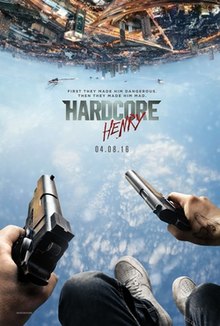
Hardcore Henry: Ever seen a videogame you felt should've just been a movie? How about a movie that should've just been a videogame?

I followed news of this film from the original music video that inspired it ("Bad Motherfucker" by Biting Elbows for those that don't know, as well as its precursor "The Stampede"), to its sneak previews and premieres at film festivals, all the way to its anticipated release internationally this past April. So, did it live up to the hype?

Hardcore Henry:
You, the audience, awake in a POV state. Your scientist wife, Estelle, addresses you as Henry, and says there was an accident that has led Henry to becoming a cyborg. Suddenly, mercenaries burst in, slaughtering the staff and kidnapping Estelle. Henry barely escapes the facility, and must travel the countryside without memories, chasing his wife with your mysterious new associate Jimmy (who may or may not be trustworthy), pursued by the mercenaries, led by the telepathic and gleefully theatrical villain Akan. Learning the extent of his newfound powers, Henry shoots, stabs, and bludgeons his way across Russia, becoming a hardened killer and super solider on his quest for revenge.
    I was very excited for this film, having heard it compared tonally to films like Mad Max: Fury Road and Crank for its emphasis on style over substance, and mindless and bloody fun over plot or character. Not that I don't love films with deep, fleshed-out characters and intricate plotting, but I also enjoy a well-made piece of escapism as well. Now, the actual film was disappointing on a few fronts, and I'll cover those right away. I felt the use of GoPros for the limited budget and goal of entirely being in first-person was impressive and practical, but the quality of the cameras does not exactly translate to the big screen all that well, as many shots were slightly fuzzy-looking. The special effects for many shoot out sequences were fine, but the CGI blood sprays and explosions often looked like a YouTube video, which is not to disrespect CG animators on YouTube, but for a feature film, it's a little more noticeable.
    Also: the lack of plot and incredibly rigid structure of this film made it often exhausting. While that sounds contradictory, I mean there was no real characters (just archetypes) to get into, so the action took center stage, But after a while, the rinse-and-repeat formula (crazy action scene, then calm break of about two minutes, then next action scene) left me feeling drained, and that this would function better as a web series or video game, something where you can take breaks at your leisure or that felt more interactive. There was also a sound issue in the final battle (the song was quieter than the sound effects), and the way the film ended felt abrupt and kind of awkward and amateur but those are incredibly minor.
    Other than those minor issues, I felt the film delivered on its promise of weird, crazy, chaotic, fun, violent action and the set-pieces were incredibly well-constructed for a first time feature director, and the lack of characters and over-the-top acting often added to the charm of this wild movie. There were non-action sequences that were incredibly Neveldine and Taylor-esque (a song and dance number near the climax of the film added some much-needed comic relief as well as tied together a mysterious plot line). The final battle was jaw-dropping, as I was not expecting the film to pack the amount of gore it did, especially not in its' final moments. It was exhilarating and entertaining as hell. Also: the opening credits sequence was very Bond, while also foreshadowing the possibly Evil Dead inspired splatstick style of humor.
    Danila Kozlovsky was entertaining as the tongue-in-cheek and ridiculous villain Akan, Haley Bennett played a decent damsel in distress (though the reveal with her character is very predictable towards the climax), and Tim Roth has a nice cameo. But the only character i can truly say is impactful in any significant way is Sharlto Copley as Jimmy. Once again, Copley shows his incredible range as an actor: he spend the movie doing silly accents and wearing goofy outfits, but is also some good comic relief and ultimately a bit of a tragic character who I actually grew to care about on some level (he is supposed to be the audience's guide/companion of sorts).
    Do not go into Hardcore Henry expecting a traditional moviegoing experience. If you like any sort of linear narrative or strong central characters, then I suggest looking elsewhere. But if you love so brainless, energetic, if a bit gruesome action and humor, then I would highly recommend it (if you've seen the music videos the film is based on, or listened to the director's band Biting Elbows' punk-style pop rock, you'll know pretty much what to expect). It is a lower budget indie film, so it may not have the special effects many Western audiences are used to expecting from action films, but the impressive choreography and insane sequences will provide ample distraction. Bravo to Ilya Naishuller on a terrific first outing, and I'd like to see him pursue more films in the future. 7/10 stars.

Hardcore (2015 film).jpg                                                           (Image: Wikipedia)

Batman v. Superman- Dawn of Justice: Bloated and boring, a review I don't want to write as much as I didn't want to see this movie but felt obligated to

I'm just trying to get this one over with.

Batman v. Superman, Dawn of Justice:
After the destruction of Metropolis at the conclusion of Man of Steel, the public is debating whether or not having Kal-El/Superman around is a good thing. Continuing his relationship with Lois Lane and job at the newspaper as Clark Kent, he is faced with a new challenger. The aging but still very active and violent vigilante Batman is operating in the neighboring city of Gotham. Batman, after first hand witnessing the fallout of Metropolis' demise, is determined to stop the overpowered alien visitor from causing any more havoc, even if it means having to take him down personally. All the while skeevy young tycoon Lex Luthor (Junior) is pulling the strings to get Superman out of the picture so he can rule Metropolis. Why is all this happening? Because DC needs a quick movie to catch up with Marvel.
    Everything about this film feels forced and purely corporate driven. It is far too early to cram this many heroes into one film as not each hero has been set up yet. Not necessarily saying everyone needs an origin movie, but at least a means of setting them up prior to the battle royale film. It took Marvel almost ten years since the original Iron Man to get to their Civil War film because it takes time to build these character relationships (however cliche) to get the audience to care about the conflict. This film barely can even find a reason for the two heroes to dislike each other, simply they have different approaches to dealing with completely different problems (i.e. Superman fights cosmic threats, Batman deals with street thugs and psychopaths).
    The problem was also adapting several different stories: they adapt The Dark Knight Returns and Superman: Doomsday simultaneously, while also doing a Justice League setup and Batman vs. Superman story. It is a jumbled mess that completely is tonally off. It is very clear that this film had extensive cuts made (solidified by the upcoming "Ultimate" R-rated cut) to keep it to the still draining 2 and a half hour runtime.
    Ben Affleck actually delivered fairly well as Batman, being dark and imposing, almost like a horror character, and really selling the idea that this is a vengeful person who puts the fear into criminals and cops alike. However, his "no killing" rule that has been so integral to his mythos for so long has been scrapped in favor of the militarized, borderline self-parodying Batman of the Frank Miller graphic novels that does not seem to wince at bloodshed or torture to achieve his goals of clean streets. Also, his motivation to hate Superman is staggeringly weak. For such a worldly and intelligent character as Batman is supposed to be, he sure jumps to xenophobia and paranoia quickly.
    The rest of the cast (at least the returners from Man of Steel) do fine but ultimately are just so droll and lifeless that they cease to be investing. Zack Snyder's casting now matches his visual palate: he's able to do such remarkable things with visuals, but always tends to suck out the color and energy in his films, surprisingly, given the comic medium's great strengths have always been a reliance strong visuals and striking colors.
    Callan Mulvey appears as KGBeast (only called by his name in this film), Scoot McNairy and Holly Hunter have new supporting roles, and Jeremy Irons is Alfred and all do okay, as none are given enough screentime to really develop (or in Mulvey's case, he's a one-dimensional henchman character who was only included to give comic fans the hope that more obscure villains will be used in the future).
     On a related note, Jesse Eisenberg as Lex Luthor was not all that bad. Sure, he had some off moments (probably due to those extensive cuts I mentioned), and many complained he's too chaotic for a Lex Luthor, but ultimately I thought the idea of turning him into a jittery, eccentric Silicon Valley-esque CEO was a fresh take, even though his dialogue was often hammy and over dramatic.
    The film's plot is drawn out and dull, and certain sequences stand out (namely the introduction of Batman, which was tense and surprisingly eerie), but a lot (the opening slow-mo sequence is just the same Batman origin scene we've seen a million times, with some added laughable religious symbolism) didn't amount to much and the real action set-pieces don't begin until the climax, at which point the movie shifts from overly brooding and grim (seriously, the charming Superman doesn't so much as crack a reassuring smile when he's saving people from danger) to a campy, silly CGI mess. Even the actual Batman vs. Superman fight felt overlong and didn't fit in this universe at all (Snyder's Kal-El went from disintegrating skyscrapers with minimal effort in the previous film to barely being able to dent Batman's armor here), and ultimately was just boring to watch because there was no investment in the characters.
    The overall choices made in the film were dismal (Jimmy Olsen, a beloved comics character, is not even named on screen and dies 30 seconds after he's introduced as Lois' CIA contact on a trip to a warzone; the odd release date in March; the extensive cuts and rush to get this film to theaters; the cramming of far too many characters and ideas into what should be just a Batman vs Superman piece; having Batman and Superman fight in only their second film together; not just making a Man of Steel sequel, etc.) If this is really DC's method of making films, then I think it's time for them to quit trying to catch up with Marvel (they're a near-decade behind them), and just stick to doing what they've always done best: standalone films. Or maybe, just maybe, slow their roll on this whole "cinematic universe" idea. Because judging by this film's reception, people aren't having it, and DC will tank if they keep this up. Zack Snyder should go back to adapting novels and remaking things because when he has to build a fresh script from the ground up, it never ends well, and his visuals are his strong point, not his storytelling abilities. 4/10 stars.

The two titular heroes, Batman and Superman, are confronting each other, with the film's logo behind them, and the film's title, credits, release date and billing below.                                                             (Image: Wikipedia)

Wednesday, May 25, 2016

10 Cloverfield Lane: A terrific psychological thriller that was almost ruined by marketing and rewrites

Today, in an immensely delayed review, I look at the spiritual sequel to 2008's found footage hit 10 Cloverfield Lane.

10 Cloverfield Lane:
After an argument with her boyfriend, a Louisianan woman named Michelle drives into the countryside looking to escape. After she is involved in an intense car accident, she awakes to find herself the unwilling inhabitant of an underground bunker, created and ruled with an iron fist by the mysterious Howard. She is joined by fellow inhabitant Emmett, and soon the survivalist Howard explains that there has been some unexplained attack which has resulted in apocalyptic conditions outside, so no one can leave the bunker. But as tensions rise among the three and Michele desires a way out, they find that whatever lies for them outside may be better than staying.
    The basis for this film was an micro-budget script titled The Cellar. I think this is incredibly apparent in that the connections to the Cloverfield franchise are incredibly loose and don't even come into play until well into the third act. I would have almost preferred it just be its own film as opposed to tying it to a nearly decade-old found footage film, but then again, in this depressing state of Hollywood it probably wouldn't have gotten a quality studio treatment without being tied to some pre-existing property.
    Mary Elizabeth Winstead makes for an impressive leading lady, and she is definitely undervalued and it is a shame she seems to exclusively get shoved into genre pieces. John Gallagher, Jr. is also strong as her male companion Emmett, whose presence in the bunker seems to put Howard in a bit of a mood for some reason. He is an effective romantic interest and very likable character for the little we get to know of him. Bradley Cooper has a nice voice cameo near the beginning, and Suzanne Cryer also cameos.
    The final member of the cast and the shining star of this film is John Goodman. Good God, the transformation of one of the most lovable actors in Hollywood into a threatening and domineering screen presence is remarkable. Every moment he's on screen and every piece of dialogue is dripped with tension, as literally almost anything could set his hair-trigger temper off. Not that he doesn't get moments that humanize him a bit, but his character ultimately comes off more pitiful and sad than sympathetic, in direct opposition to Goodman's usual Teddy Bear appeal.
    The film really was a solid and tense psychological thriller, and incredibly well-done and paced bottle story (i.e. story set in a single location with a small cast) as well as mystery. The last 15 minutes almost ruin the entire movie, as that is when they shove in the unnecessary "tie" to Cloverfield, and honestly I thought of two places exactly where they could have cut to black and I would've been totally satisfied and even impressed (i.e. right after a character leaves a location and discovers something about the outside world, or right after this same character sees an object in the distance and says "You've got to be kidding me," you'll know what I'm talking about as soon as you finish the film).
    Overall, this is a terrifically tense movie that succeeded in getting me invested into its not entirely unique but still intriguing premise, though I would recommend just turning it off before the climax totally drops the ball (you'll know exactly what I'm talking about). Maybe a fan edit will be created one day (hopefully). 6.5/10 stars.

10 Cloverfield Lane.png                                          (Image: Wikipedia)


Saturday, December 19, 2015

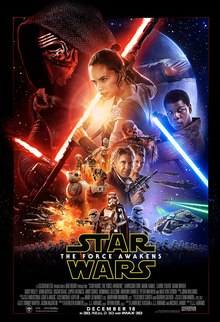
Star Wars: The Force Awakens- Perfect example of when hype kills a film

Yesterday, I got to see highly anticipated seventh installment in the revolutionary Star Wars franchise.

Star Wars Episode VII, The Force Awakens:
Since the fall of the Galactic Empire in the original trilogy, Luke Skywalker has retired from his Jedi teaching and gone into hiding. The main heroes have scattered and from the ruins of the Empire has risen the smaller but still mighty First Order, the last remnants of Empire loyalists. To fight this, the Rebel Alliance has evolved into The Resistance to fend off the growing influence of this Order. On the desert planet of Jakku, a scavenger named Rey meets a defective stormtrooper named Finn, who together embark on a journey to join the Resistance to find Luke and defeat the First Order.
    In all honesty, I wasn't all that excited when I saw the first teaser trailer last year, as I knew it was coming and it was too far away to be pumped about. But by the time the final trailer rolled out two months ago, I was aboard the hype train like everyone else, eager to see what new breath of fresh air J.J. Abrams could bring to the franchise, perhaps restoring the tarnished reputation left by the prequels. When I saw the film last night, surrounding by drooling fans, I found myself suddenly worried about the film, as anyone would be. When the opening crawl appeared, with John Williams' iconic symphony score rousing at full volume, it was surreal. I was seeing a new Star Wars film-- in a movie theater-- on opening night. Then the opening crawl started. Sure, it seemed like Star Wars type text, but the font seemed a bit off, and the crawl assumed the audience knew about the planets already, but I tried to remind myself that the opening crawl of the originals was kind of basic, too, so I just tried to settle down.
    I won't delve into the plot at all (obviously, at least not in this post), but I will say that the story of this was an extreme disappointment. There were at least three major points where I instantly predicted exactly what was about to happen. This was mostly due to the fact that the film was a good 80% fan service. My particular audience ate this up, clapping and cheering blindly merely because they recognize characters from previous films. They even left pauses in the film for the applause. The audience I had seemed to have drunken the collective Disney Kool-Aid before entering because during the previews, which at my theater were all for other Disney-licensed films, they ate everything up, even cheering for The Jungle Book trailer and howling with laughter at the Zootopia trailer, which featured nothing but one joke about how sloths are notoriously slow. I felt like the last sane person in the place, "Am I the only person who can watch things objectively anymore?" The row ahead of my group was full of these fanboys who wouldn't stop rubbing their hands together, eagerly awaiting the next big applause moment when they see something they recognize from previous films.
    There was one key character reveal I felt happened far too early in the film and would've been better saved for later. The humor in the film was very grating, Joss Whedon-style humor. I feel like for some reason, people think summer blockbusters need to be either very dark or very funny, no matter how inappropriate either of those things seem for the film. So now Star Wars is packed in with Marvel movie-style jokes in nearly every minute. But that just doesn't feel at all Star Wars to me and I feel it is the thing that will date the movie, as that is just a hip cinema trend right now. If they had restricted themselves to a select few jokes and fan service bits (because some definitely worked better than others), then the film would be better for it by far.
    The film lacks a personality of its' own, being a near carbon copy of the basic structure of the original Star Wars, with all of the chemistry and uniqueness sucked away. The main cast were fine actors, but the new actors definitely didn't mesh with the old all that well, especially when the old were so busy delivering fan service it was hard for them to just be invested in the action. A lot of the character relationships feel forced, and while Star Wars wasn't the most depthful film in terms of character arcs, the relationships still felt pretty organic and natural, where here they feel like "Oh, we need the old characters to like these new characters because that's the way it needs to be." There seemed like too many main heroes, to the point where, like in the prequels, it's hard to pinpoint who exactly is our main character, whose is the journey we are following. There are too many character being juggled for a film of this length and scope and too many cameos and too many people cast on name recognition or because they are in popular films and television shows who wind up barely being in the film at all.
    The storyline takes far too many hints from the original film, including the main base of the villains, and the three antagonists of this film: General Hux, Kylo Ren, and Supreme Leader Snoke all feel a little too close to Grand Moff Tarkin, Darth Vader, and Emperor Palpatine to really be seen as new characters, though they have minimal changes. Kylo Ren is the villain we spend the most time with, and he is also the least threatening. The trailer smartly left in little footage of him, making him feel mysterious and imposing. In the finished film, his intimidation factor quickly diminishes after the first act, and his entire character motivation actually makes you empathize with him more than fear him, and see him as a tragic villain. Remember, it took three films for Darth Vader to reach the status of tragic villain. We're on film number one and already Ren has had an entire fucking character arc. Where does he even go from here? Look, it's perfectly fine for a main hero to have a shift in character by the end of a film, even if part of a larger story (Hell, Han Solo had that in the original film), but the antagonist, someone we should fear and distrust, should not become mostly empathetic by the end of the first part in a trilogy, especially in a simplistic adventure story like this. The planets featured in this film seem to just be renamed versions of planets we've visited in other films just for the sake of appearing original, when this is just as transparent as the plastic packaging of the toys this movie was created to sell (C-3PO literally is given a red arm so they can have a joke where 3PO mentions it and so they can sell new toys of it). The story also lacks a clear goal. Every film in the original trilogy has a clear and concise goal for our heroes, even if they got sidetracked by other things along the way. These motivations were always clearly explained in the crawl. Star Wars: rescue Princess Leia and blow up Death Star, The Empire Strikes Back: Luke complete Jedi training and Rebels escape Empire, Return of the Jedi: rescue Han Solo and defeat Empire. Even the prequels has fairly clear goals for the heroes, The Phantom Menace: stop Trade Federation from blockading Naboo, Attack of the Clones: investigate Clone Army and stop Separatists, Revenge of the Sith: stop remaining Separatists and investigate Palpatine. In this film, the goal seems to be to find Luke, but then new plotlines appear and suddenly they become the main goal, and then it goes back to finding Luke, leaving the film feeling very unfocused.
    The Galactic Empire always had the Nazi imagery prevalent in its' depiction, but here, the imagery feels ridiculously overt. Much like everything else in this film, the charming simplicity of the originals is confused by the writers for excusing beating people over the head with expositions and blatant dialogue. The First Order's symbol also looks oddly reminiscent of the Red Hot Chili Peppers logo.
    The mere existence of this film also kind of denotes the happy ending of the original films, and therefore sort of destroys the whole point of the original films. By presenting this idea that the Empire/Sith will always exist in some form kind of makes the Rebellion/Jedi's triumph over them seem pyrrhic and tragically unimportant. Even the title "The Force Awakens" kind of belittles the entire idea of the Force. Now instead of an ever-present force of spiritual energy that anyone can tap into at any time, it is this weird force that comes and goes in intensity depending on the time period. It has to "awaken" when the time is right.
    The entire Expanded Universe was scrapped because of this film, something that make me angry considering all the great source material in that EU. They did keep some basic plot elements from later books and comics, but overall retcon that entire line of stories, which creates this odd sort of alternate timeline deal in the Star Wars Universe.
    The special effects were excellent, particularly in the choice to have mostly practical effects. The only problem is this oftentime clashes with the more obviously CGI effects. The action sequences were a mixed bag. Rather than building to a large battle at the climax like the original trilogy films always did, with minimal action placed carefully throughout, this film has a lot of smaller action set-pieces, with no big finish that leaves the climax feeling a bit empty. The X-wing battle against Starkiller base (which you see in the trailer, so that's not a spoiler) felt all too familiar and just felt lazy, with no emotional impact whatsoever. The lightsaber duel ditched the flashy and unbelievable acrobatics of the prequels for the more down-to-earth, blunt force approach of the originals, which feels more raw and powerful, so there's a big positive. However, the lightsaber duel lacks the emotional backing that the original duels had. Every lightsaber duel, no matter how brief or awkwardly choreographed, meant something big in the originals. Obi-Wan vs. Darth Vader in the original film signified the end of their entire relationship together, and further cemented Vader's place as a ruthless bad-ass who cuts down his own former friend and master in cold blood. Luke vs. Darth in the second film again cemented Vader as a force to be reckoned with, and showed Luke was not nearly prepared enough to take on a Sith master, and culminated in the biggest and probably most famous twist ending in modern pop culture. Luke vs. Darth in the third and final film shows Luke has grown and mastered his skills, but is still challenged by temptations towards using anger and hatred to win fights, and showed Luke's strength in prevailing over the Dark Side, both in physically defeating Darth, and refusing the Emperor's offer to kill Vader and take his place. Here, it is just bland heroes fight bland villain at end of bland movie for slight resolution.
    There is a completely bullshit cliffhanger ending that will disappoint viewers, leaving you wanting more. While some (reviewer Chris Stuckmann, for example) might see this as a positive, I can't say I do. When you leave the theater unsatisfied with the film you got because of a TV show-esque cliffhanger, that's not good filmmaking, that's sacrificing the strength of your story to franchise build (something Disney has gotten really good at with Marvel, and is trying to poison Star Wars with now as well). But, in the same token, there's very little mystery left for the next two films. In trying to satisfy all the abundant fan theories and get those out of the way, the writers and producers seem to have played most of their cards at once, leaving themselves written into a corner for the next two film.
    Star Wars: The Force Awakens is a fine blockbuster film. But that's just it. It feels all too similar to other blockbusters (particularly Guardians of the Galaxy, whose tone should not be that of this film), and lacks the creative magic that made the originals so profound. J.J. Abrams seemed to be caught up in being a fan directing a movie franchise he loves and trying to satisfy other fans like him that he forgot to just a make a good movie, instead trying to pander to fanboys and the Marvel and Pixar-loving masses. It is now oversaturated in the new Disney style, and is just a cash-cow of a film with mild entertainment value. It is almost worse than the prequels in a way, as at least those were so bad they were funny; this is just kind of vanilla. The intense hype is having a similar effect to The Phantom Menace: people are going into denial and saying its' one of the best of the Star Wars movies, but in a few years they'll realize it's not all that great and it will be a fun movie for everyone to rip on. I guess my greatest problem is that it just doesn't feel like a Star Wars movie, even less so than the prequels. After only one film, with all its' fanservice and insane amount of ad tie-ins, I'm kind of over this franchise, just like I'm over all Disney licensed products. I don't wish to see two more of these films from equally under-qualified fan directors (not to knock them for being bad or anything, just not for this type of film). Don't believe the hype. Go in with lowered expectations and you'll probably enjoy it more. Try to avoid crowded theaters with fanboys, as their incessant cheering and clapping at every event in the film became unbearable and frustrating. 6.5/10 stars.


Star Wars The Force Awakens Theatrical Poster.jpg                                                                (Image: Wikipedia)

Note: I miss the Drew Struzan posters.

Friday, December 18, 2015

Selma and Chappie: Two films I wanted to see in theaters and didn't get the chance

Today, I quickly recap two films I saw a while back on a plane ride home from Ireland in July.

Chappie:
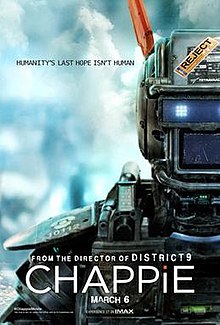
Neil Blomkamp's follow-up to Elysium continues his trend of trying to recapture the spirit of his freshman effort District 9 but continuing to disappoint. While I didn't hate it like most people, many scenes that are obviously supposed to be taken seriously come off as laughable. And there are characters the film wants us to sympathize with that are entirely unsympathetic. Hugh Jackman's villainous character feels the most human and relatable out of anyone, and we're supposed to hate him. He only goes full villain at the climax, and it feels out of character and weird. The end reveal is one of the worst I've ever seen, and the only great performance is Sharlto Copley as Chappie. He's always great in these projects, no matter how underwhelming. His lead hero in District 9 was likable and tragic, his villain in Elysium was despicable and vicious, and here, he's vulnerable, funny, and sweet. If one good thing can be said of Blomkamp's filmography, it's that they showcase Copley's range as an actor. Some of the actors were good, but their accents were so thick that even when speaking English they had to be subtitled. The rap duo characters weren't as annoying as I'd heard, but they weren't great, either. The male one is especially unlikable up until the end, and even then I was on the fence. Dev Patel is wasted here. The end song was oddly out of place. Overall, I enjoyed Chappie more than Elysium, but I feel Blomkamp needs to escape these somewhat pretentious sci-fi projects and really advance as a filmmaker. 6/10 stars.

Chappie poster.jpg

Selma:
This project had a lot of hype, and while the performances are great and the subject matter obviously historically important, I felt this was a kind of boring movie that was obvious Oscar bait. 12 Years a Slave this is not. Sure, there's moments of shocking racism, but nothing about it feels particularly raw, biting, or poignant. It's all just above-average. It feels a little bit like Lee Daniels' The Butler in its' length and lack of attention to detail or character, instead just cramming in as much history as it can. The end song "Glory" by John Legend and Common was excellent and very bold. David Oyelowo fits the bill of MLK Jr. perfectly, and the cast is filled out with great character actors, from Wendell Pierce to Tom Wilkinson to Dylan Baker and Tim Roth and Stephen Root, Michael Papajohn, Ruben Santiago-Hudson, Andre Holland, and Carmen Ejogo. This cast is filled with so much talent, but a lot of it is constricted to bland minor roles so prevalent in these recent biopics. Where's the great biopics of the past, like Malcolm X or Lawrence of Arabia? Is the epic biography film a dead art? It appears so. Selma is entertaining for the most part, though a bit dry, and is ultimately disappointing. 6/10 stars.

Selma poster.jpg                                                      (Images: Wikipedia)

Monday, October 5, 2015

Fantastic Four: I think this is a great example of how superhero films are hitting another dark period

Today, I look at the latest failed attempt at making an adaptation of Jack Kirby and Stan Lee's classic superhero team. (Sorry this review is almost two months late.)

Fantastic Four (or Fant4stic):
Reed Richards, a young genius who has recently discovered the secret to interdimensional travel, is enlisted as a help on a research project at the Baxter Institute in New York by Dr. Franklin Storm and his children Sue and Johnny, and is also assisted by his childhood best friend Ben Grimm and Sue;s former flame and genius computer scientist Victor Von Doom. When a trip through their portal goes horribly wrong, the five of them end up with strange and horrible superpowers, and the government begins training them to be biological weapons.
    I actually didn't get the hate behind this movie. I thought it was a decent, surprisingly dark and moody superhero film, with the occasionally bad-looking effect. I actually enjoyed it a fair amount -- until the last twenty minutes, when I realized how rushed the finale was, and cliche, and totally uninspired and worthless and dull. And it made me resent the rest of the movie.
   Before I heard the bad news that this film bit the big one, I had no interest in seeing it. After hearing the stories about young director Josh Trank's completely unprofessional behavior on set, and his getting kicked off the new Star Wars spin-off as a result of this film, and hearing about the bastardization of the main villain, I couldn't wait to see this epic bomb.
   But when I saw the film, I didn't mind it for the most part. The main cast (Kate Mara, Jamie Bell, Miles Teller, Michael B. Jordan, Reg E. Cathey, the latter two being Wire alumni) were fine, and although Toby Kebbell was a little over-the-top (and came off like a more serious Gilfoyle from Silicon Valley) he was a decent interpretation of Dr. Doom. Speaking of which, let's get the positive out of the way: from what I heard, the original premise for the film was supposed to be a David Cronenberg-esque body horror film that would show the real ramifications of the type of powers that the Four have. There are still elements of that film in here, especially in the scenes immediately following the cosmic accident and a scene with Dr. Doom at the end blowing up people's heads with telepathy (which I found shockingly violent and awesome).  Certain updates of the story (interdimensional travel instead of space storm. Johnny being black) stayed in the script, others didn't. In the original script, Dr. Doom's name would be changed to Victor Domashev, something a little more realistic to fit he tone of the film. Fanboys didn't like this, and bitched so much the producers made Trank change it back to Von Doom. I wouldn't have minded the change, and felt it would have been appropriate. The Thing's CG work looks good and fells like a good use of digital effects.
    Now for the problems: the climax has no fucking build-up... at all. They build up this plot about the government trying to make the heroes into weapons, and then they just drop that plot, make the heroes reconcile their differences, and introduce a brand new villain in the last fifteen minutes! The new Doom was pretty cool I thought... until he just opens up a blue laser portal for NO reason and is defeated like a bitch in ten minutes. Not to mention the whole second half moves way too fast compared to the pace of the first half, all the character motivations feel like they move too quick and there's no build-up. Say what you will about the Tim Story films, but at least they BUILT to something. In my opinion, this film could have been vastly improved by the plot being stretched an extra forty minutes, building up the team's bonding, and played up the slimy government agent as the villain, eventually reintroducing Doom in the finale and having him take over Latveria as a stinger ending.
   Fantastic Four is a shameless cash-grab, and a poor example of when a director has bold ambitions and a big budget, but not enough experience to handle it. The ending soils a pretty decent superhero film with potential, and if the sequel proves to be anything like this, I see no future for adaptations of this superhero team. It's like the brand-name is cursed. 4/10 stars.

Fantastic Four 2015 poster.jpg

(Image: Wikipedia)

Sunday, September 27, 2015

Top 25 Horror Films of the 1970s: Arguably the greatest decade for revolutionary horror cinema

Because October is right around the corner, I figured I'd begin counting down my top horror films per decade once more. I wanted to get more done last year but ran out of time. This year, I'm hoping to reach at least the 2000's.

Criteria:
Must be a film produced between 1970 and 1979
Must be a horror film, thriller, or have horror-related subject matter

As always, a little backstory...
The Seventies were a decade, much like the Sixties, of revolution. After the Manson murders in Southern California, the American public was exposed to violence never thought of before. The ensuing media circus surrounding the trial of Charles Manson and his associates prompted a new fixation on cults and serial killers. Soon, the macabre and sick exploits of Jeffrey Dahmer, Son of Sam, Ted Bundy, and John Wayne Gacy became subjects of national interest and analysis. The Vietnam War drew to a close, with many veterans returning home mentally and physically destroyed by the countless horrors they had witnessed, which only strengthened the anti-war movement which grew ever-strong in the country. The deaths of John F. Kennedy, Martin Luther King, Jr., and Malcolm X the previous decade had made those men martyrs in the eyes of their followers, and had spurned an even more radical counter-culture ideology that was adopted by young college and high school students.
    These events had the opposite effect on new horror cinema as past events did on old horror. When the Great Depression and World War II hit, people sought movies, especially the fantastical Golden Age horror films, to escape from their real-world troubles. However, now, in this new age of cinema, people went to the cinemas to be faced with troubling questions about the state of the world. New, young filmmakers such as Martin Scorsese, William Friedkin, George Lucas, Steven Spielberg, and Francis Ford Coppola were rising in the film-making world, breaking the rules of Hollywood and producing some critically acclaimed and high-grossing work such as The Godfather, American Graffiti, The French Connection, Duel, Mean Streets, Taxi Driver, Jaws, and Star Wars, a lot of which had more violence and moral ambiguity than was allowed in most major studio fare. Jaws and Star Wars became the first films that were referred to commonly as "blockbusters," setting a new trend in Hollywood.
   On the seedier end of the independent movie scene were young, fledgling directors like Brian De Palma, George A. Romero, Wes Craven, John Carpenter, Dan O'Bannon, Tobe Hooper, and Sean S. Cunningham, These men were lovers of film who were raised (at least mostly) on a diet of Universal monster movies, Hammer horror, Hitchcock, and 50's sci-fi schlock. Taking what they loved about the classic horror genre while adding the brutality and violence so present in Seventies culture made for a potent mix that produced some of the best films ever made. By the end of the decade, Carpenter's Halloween reinvented the entire horror genre and spurned forth (arguably) its' most popular sub-genre: the slasher film...

The List:

25. Blacula (1972): This blaxploitation horror film may sound funny on paper, but is actually fairly effective. William Marshall is charismatic in the titular role, and while the plot isn't all that deep, it's pretty good for a cheaply made exploitation movie.

POSTER - BLACULA.jpg

24. Magic (1978): This psychological horror film further popularized the killer doll genre of movies. While it borrows much from previous "killer ventriloquist dummy" media like episodes of The Twilight Zone and the film Dead of Night, it infused a mystery element and was made by a stellar production team: director Richard Attenborough, and a cast featuring Anthony Hopkins, Ann-Margaret, Burgess Meredith, and Ed Lauter elevate this film above the general cheesy killer pupper fare.
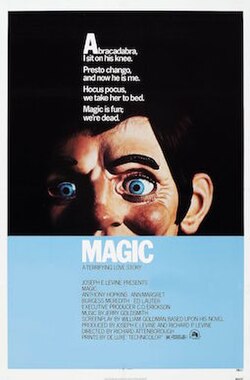
Magicposter.jpg

23. Valerie and Her Week of Wonders (1970): This surreal and bizarre Czech film is a twisted fairy tale chronicling a young girl named Valerie's encounters with a thief, a masked monster, and a priest, among other things. A dreamlike film that's almost reminiscent of David Lynch, it packs in some weird and unsettling imagery that sticks with the viewer, and is a great example of an exercise in surrealist horror.

4467 print2.jpg

22. Deathdream (1974): Bob Clark may be best known today for directing A Christmas Story and Murder By Decree, but in the 70's, he was an independent horror film director. And a good one, at that. His films were ahead of their time, and dark and brutally violent, and, best of all, genuinely unnerving. This film was a commentary on the Vietnam War's effects on the folks back home, as well as a quasi-adaptation of the W.W. Jacobs short story "The Monkey's Paw".

Deathdream.jpg

21. The Abominable Dr. Phibes (1971): This Vincent Price vehicle came late in his career, but was successful enough to spawn a sequel. A classic revenge story set around the Ten Plagues of Egypt, the film sees Price once again play a disfigured genius driven mad and fueled by vengeful rage. The kills in the film push the boundaries of believability, but are unique and memorable. A campy and often neglected entry in the horror genre, it's one of Price's better films.

Abominablephibes1.jpg

20. Nosferatu the Vampyre (1979): Werner Herzog's artful remake of the 1922 classic silent film stars Klaus Kinski in the titular role. Shot in both English and German, this film continues in the trend of Herzog and Kinski's partnership, it is a vivid and beautiful film to look at, and Kinski is perfect as Nosferatu. Despite the allegations of animal cruelty and abuse on the set, which Herzog apparently neglected, the movie is still an immensely enjoyable revamp (no pun intended), and one of the few remakes that is on par with its' source material.

Nosferatu Phantom der Nacht.jpg

19. Phantasm (1979): This bizarre and eerie supernatural thriller was a locally financed indie film that wound up spawning a string of sequels, and cementing Angus Scrimm's Tall Man character as an icon of the horror genre. With some nightmarish visuals, unconventional structure, and an imposing boogeyman figure as the villain, Phantasm is one of the more underrated 70's horror films.
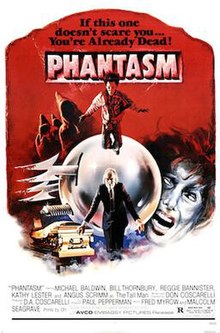
A woman screams and covers her eyes, which are then superimposed over her hands

18. The Brood (1979): David Cronenberg's body horror film serves as a metaphor for feminine empowerment gone awry and as an interesting look at messy divorces, and asks an interesting question: if we could actually manifest those negative emotions we feel towards others, could it wind up controlling us? The shocking and cringe-inducing imagery and nasty special effects paired with those messages part of what Cronenberg does so well: make us think, and make us squirm, often at the same time.

Thebrood.jpg

17. Alice, Sweet Alice (1976): Featuring Brooke Shields in her film debut, this slasher film is a cut above the rest. This mostly owes to the exceptionally creepy and haunting mask worn by the killer, a translucent mask highlighted with drag queen-esque makeup. The film was released three times under three different titles: as Communion at the Chicago International Film Festival in 1976, theatrically in 1978 under this title, and a third time in 1981 as Holy Terror to capitalize on Brooke Shields' growing popularity. While borrowing from many previous films, most notably the raincoat motif from Don't Look Now, this movie stands on its' own as one of the more genuinely scary of the slasher films, and one that predates Halloween. And speaking of Don't Look Now...

Alice Sweet Alice.png

16. Don't Look Now (1973): A startling thriller about psychic powers, serial killers, and ghost girls, the film, much like many 70's horror films, took elements that made old horror films so great, updated them for modern adult audiences, and were being made by some bigger names in the film industry. This one stars Donald Sutherland and Julie Christie, two major stars, and was directed by the acclaimed Nicolas Roeg. This movie has some visually striking images, and one of the best (and most unexpected) twist endings ever.

Dont look movieposter.jpg

15. Black Christmas (1974): Bob Clark shows up again on this list with his dark precursor to A Christmas Story. A brutal and dreamlike film with a mysterious killer, it set a trend for slasher films, and reportedly this was one of the films that inspired John Carpenter's Halloween, as the planned sequel for this film would have taken place on that holiday. The camera angles, opening shot, and violent kills set the stage for Halloween, though this film is even darker, bloodier and more vulgar than that film was. The film has future stars like Olivia Hussey, Andrea Martin, Margot Kidder, and John Saxon, and 2001 star Keir Dullea. The unsolved identity of the killer makes the film unsettling as it leaves so many doors open, and the killer's weird, gender-neutral voice is chilling and sticks in your head.

Black christmas movie poster.jpg

14. The Hills Have Eyes (1977): Wes Craven's second major horror movie was stars future E.T. star Dee Wallace and is a brutal and unapologetic film that chronicles one family's struggle for survival against an inbred family of feral cannibals. Michael Berryman (the man on the poster) was shot to B-movie stardom for his unique physical appearance and imposing performance. The film was successful enough to spawn a sequel and a remake and its' sequel. The movie also further popularized the 70's sub-genre of middle-America family vs. group of deranged killers, and also popularized the feral cannibal sub-genre.

Hillshaveeyesposter.jpg

13. Invasion of the Body Snatchers (1978): This remake of the 1950's classic by Philip Kaufman stars Donald Sutherland, Leonard Nimoy, Brooke Adams,Veronica Cartwright, and Jeff Goldblum. Managing to be just as memorable as the original in its' own way, with surreal, 70's acid-trip imagery and a harrowing twist ending, this movie also has a much more graphic and nasty pod people transformation process and the logic behind the transformations is actually an improvement over the original, which had a plot hole in that area. While not as iconic or important as the original, this reimagining is definitely one of the best remakes of all time.

Invasion of the body snatchers movie poster 1978.jpg

12. The Wicker Man (1973): This dark occult mystery film pits a devoutly Christian police detective against an underground pagan cult. Christopher Lee's performance as the villain Lord Summersisle is one of his more underrated, and the cast, featuring Edward Woodward, Ingrid Pitt, Diane Cilento, and Britt Ekland. It has some great suspense, an interesting soundtrack, a compelling mystery that slowly spirals into a much larger conspiracy, and has a fantastic and horrific ending reveal. The hilarious 2006 remake starring Nicolas Cage is only entertaining on an ironic level, and can't hold a candle to the original.
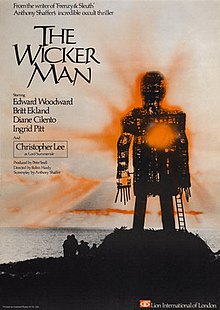
The Wicker Man (1973 film) UK poster.jpg

11. Eraserhead (1977): David Lynch's first feature is one of the most nightmarish and stomach-churning movies ever made. The bizarre and uniquely nasty imagery, industrial location and soundtrack, dreamlike narrative, and creepy and odd characters set the standard for Lynch films: symbolic and weird movies that creep under your skin.
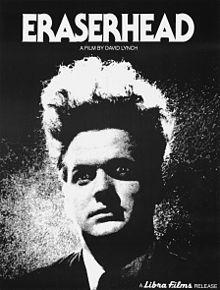
Eraserhead.jpg

10. The Last House on the Left (1972): A brutal and sickening revenge thriller, produced by Sean S. Cunningham and directed by Wes Craven in his debut film, the movie serves a warning about the consequences of revenge. Reflecting the horrific side of the Love Generations showcased by the Manson murders, this grindhouse exploitation film features some of the most brutal violence seen at the time. The violence was enough to get it banned in several countries and cause a lot of controversy upon release. But it is this violence that assaults the viewer and makes them ponder the consequences of it in the real world. Many people mistake this movie for glorifying or sexualizing violence, when it is doing the exact opposite, it is a warning against violence, unlike the 2009 remake, which ends on a slightly happy note and glorifies the revenge sequence at the end of the film as justified.

LastHousePoster.jpg

9. Suspiria (1977): Dario Argento's stylish Italian giallo movie is one of the most beautiful and colorful horror films to look at. Part of his "Three Mothers" trilogy, this movie is famous for its' beautiful cinematography, vivid color palates, and almost fairy tale-esque plot. The score by prog-rock band Goblin is excellent, and set a trend for prog-rock and synth bands composing scores for horror and sci-fi films during the 1980's.
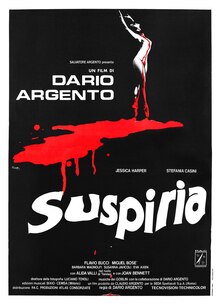
SuspiriaItaly.jpg

8. Carrie (1976): Based on Stephen King's bestselling 1974 novel, Brian DePalma's masterful adaptation darkened the ending and provided some great cinematography and suspenseful sequences. The climactic dance scene is taut and has the viewer on the edge of their seat, until the moment when all hell breaks loose and Carrie has her brutal revenge on all those who wronged her (and some who didn't). Sissy Spacek and Piper Laurie both had Oscar-nominated performances, Spacek for her role as the timid and emotionally troubled teenage girl, and Laurie as her psychotic and domineering Christian mother. Nancy Allen and John Travolta also appear in the film, another case of future A-listers appearing in smaller projects. The relationship between Carrie and her mother is tragic, symbiotic, and cringe-worthy to watch, and is the dramatic backbone of the movie. The first Stephen King movie adaptation was also based on his first novel, and kick-started a string of over 100 adaptations of his various works.

Carrieposter.jpg

7. The Omen (1976): Richard Donner and David Seltzer's Satanic thriller has a moody and atmospheric score, great lead performances by Gregory Peck, Lee Remick, and David Warner, and one of the best "creepy kid" performances by Harvey Spencer Stephens. The mystery surrounding the boy continues to unravel in unexpected ways, and the film masterfully builds to a crescendo where our leads desperately try to stop the horrible force that is Damien. However, unlike The Exorcist, The Omen leaves an a much more ominous and foreboding ending, with no comforting happy ending to be had.

Omen ver4.jpg

6. Alien (1979): Dan O'Bannon's script and Ridley Scott's eye of visuals combine to create the greatest of the sci-fi horror movies. H.R. Giger's phallic and iconic creature design and disturbing art style contribute to much of the film's look. The lead performances by Sigourney Weaver, John Hurt, Tom Skerritt, Veronica Cartwright, and Henry Dean Stanton are phenomenal, particularly Weaver's turn as Ellen Ripley, one of the most bad-ass female leads of all time. The effective use of long tracking shots, false scares, and long periods of suspense and build-up make Alien just as much a Gothic horror/slasher film as it is a sci-fi thriller. And although it borrows a lot from the 1950's film It! The Terror from Beyond Space, it also contributed enough original visuals and scares (chest-burster scene) to be its' own film.

A large egg-shaped object that is cracked and emits a yellowish light hovers in mid-air against a black background and above a waffle-like floor. The title "ALIEN" appears in block letters above the egg, and just below it in smaller type appears the tagline "in space no one can hear you scream".

5. Dawn of the Dead (1978): George A. Romero's follow-up to his 1968 Night of the Living Dead is is color and cranks up the gore and returns to his social commentary. Instead of being about race relations, it's about mall culture turning Americans into zombies. The leads, including Ken Foree, are great and the set-pieces, especially the final sequence where the survivors must face off against both a biker gang and a horde of incoming zombies is spectacular. It surpasses the original in every conceivable way, and although it has a happier ending (the original cut of the film had a much more somber end), it is a darker film than its' predecessor. It also has one of the best lines/taglines in horror history: "When there's no more room in Hell, the dead walk the Earth."

 Painted theatrical release that includes various credits, an ominous zombie looking over the horizon, and the words "Dawn of the Dead" in military print below.

4. The Texas Chain Saw Massacre (1974): Made on a shoe-string budget with a cast of unknowns (mostly Texas natives), Tobe Hooper's grimy and nasty grindhouse film introduced the world to slasher icon Leatherface and his family of deranged cannibals. A film that remains discomforting today due to its' improvised, documentary-style feel and savage violence (most of which is off-screen and implied, leaving it to the viewers' imagination), it also inspired many modern filmmakers, including Peter Jackson, and was a forerunner of the slasher genre. Gunnar Hansen remains the best Leatherface, mostly due to his convincing portrayal that doesn't make him totally sympathetic like the remake tries, but also reminds us that he, too, is human and has good traits (cares for his family's well-being), but also constantly reminds us that he is a force to be reckoned with. His mask seems more authentic than the remake's as well, further creating this weird blurring-the-lines effect where one can't be sure what they are seeing is staged or not. The other actors, including Ed Neal, are so good at portraying demented killers that one could almost be convinced Hooper just cast real crazy people in his movie.

A white film poster of a man holding a large chainsaw, with a screaming woman fastened to a wall behind him. The writing on the poster says, "Who will survive and what will be left of them?"; "America's most bizarre and brutal crimes!"; "The Texas Chainsaw Massacre"; "What happened is true. Now the motion picture that's just as real. "

3. Jaws (1975): Steven Spielberg's innovative blockbuster film faced numerous production problems, resulting in a malfunctioning mechanical shark on set. Due to this, the shark was used more sparingly than Spielberg had hoped, but this led to the team mostly using POV shots of the shark, and because the shark only appeared on screen briefly once in a while, it built up incredible suspense to when it would next appear. With John Williams' iconic and slow-building main theme scoring the film and some great performances by Roy Scheider, Richard Dreyfuss, and Robert Shaw (especially Shaw, who plays the memorable Quint, who gives a chilling monologue about shark eyes), this adventure-thriller based on Peter Benchley's novel remains one of the top 20 films ever made.

Movie poster shows a woman in the ocean swimming to the right. Below her is a large shark, and only its head and open mouth with teeth can be seen. Within the image is the film's title and above it in a surrounding black background is the phrase "The terrifying motion picture from the terrifying No. 1 best seller." The bottom of the image details the starring actors and lists credits and the MPAA rating.

2. The Exorcist (1973): William Friedkin's adaptation of William Peter Blatty's demonic possession horror novel (which in turn was based of a reportedly true story) caused mass waves of controversy upon release. Christian groups claimed it was possessed by Lucifer himself, while most of the general public ran screaming from the theater upon seeing it. The special effects by Dick Smith were revolutionary and still look convincing today. The vulgar language, disgusting imagery, and frightening voice of Mercedes McCambridge as possessed Reagan are what make the film so memorable and terrifying to this day. It was the first horror film nominated for Best Picture at the Oscars, and it is led by a stellar cast, featuring Ellen Burstyn, Linda Blair (doing a great performance for a child actress), Jason Miller, Lee J. Cobb, and Max Von Sydow (playing a character decades older than he actually was). The main theme from the album Tubular Bells is up there with John Carpenter's Halloween score as one of the eeriest and most ear-wormy movie themes of all time.
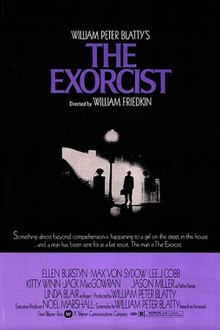
Exorcist ver2.jpg

1. Halloween (1978): John Carpenter's classic slasher film introduced the world to the first of the modern boogeymen (Michael Myers) and really defined the tropes of the slasher genre. It was followed by a slew of copycat films, and shot Jamie Lee Curtis (daughter of Janet Leigh) to stardom and set her "scream queen" status. The musical score, pacing, POV and tracking shots, and performances by Curtis, Donald Pleasance, and stuntman Nick Castle. The lack of gore demonstrates a great amount of restraint on Carpenter's part, and the shoestring budget was made back a hundred-fold by box office revenue and a consistent word-of-mouth campaign. It is undoubtedly the most influential of the 1970's horror films and the best slasher movie of all time.

Halloween cover.jpg

Runner-ups: Vampire Circus, Martin, The Vampire Lovers, Daughters of Darkness, Straw Dogs, I Spit on Your Grave, House (1977), Piranha!, Legend of the 7 Golden Vampires, Tourist Trap.