Friday, October 23, 2015

Mission: Impossible- Rogue Nation: A review so late this movie will probably be on Blu-ray soon

Sorry for the extreme delay on reviews, I'll be pumping out more in the next few days and probably do another "Top 10 Horror" list for Halloween.

Mission: Impossible, Rogue Nation:
Ethan Hunt is on the run from the CIA, after the Impossible Mission Force is shut down completely. Not only that, but he is trying to single-handedly unravel the conspiracy surrounding The Syndicate, a "rogue nation" of sorts that is essentially an evil IMF dedicated to advancing its' own goals and goals of its' investors through strategic terror attacks made to look like they are connected to other groups. Hunt must team with mysterious newcomer Ilsa and his old teammates Benji, Luther, and William Brandt to clear their names, avoid the CIA, and prove to the world that The Syndicate is real.
    Now, this was originally scheduled for a December release, like the previous installment Ghost Protocol, but was pushed forward to avoid box office conflict with Star Wars VII (smart move). This is a film that feels like a rushed release. Released with little publicity for a summer blockbuster in late July, it just felt forced and unnatural. This is also obviously similar to the upcoming Bond film Spectre, in that both focus in on the heroes fighting an evil organization that is a dark reflection of their own agency, and both evil organizations in the films are iconic enemies of their respective franchises.
    Tom Cruise is still a very entertaining and formidable action star and is able to put his absolute all into every scene and stunt, which is very admirable; it's amazing how few of his films use stunt doubles. Ving Rhames, Jeremy Renner, Simon Pegg, Alec Baldwin, and Rebecca Ferguson make up a strong supporting cast with Rhames and Pegg being the best of them, with Rhames having a smaller but still pivotal role. Ferguson makes a decent newcomer to the cast, but there's something so cliched about her whole femme fatale mystique that detracts a bit from the performance.
    Sean Harris plays the film's main mystery villain, whose identity I won't spoil. He is the leader of The Syndicate, and is fairly slimy and creepy, almost reminiscent of Toht from Raiders of the Lost Ark or Le Chiffre from Casino Royale. However, he is nowhere near as strong or memorable as a Bond villain, but is an improvement over the previous installment's slightly underwhelming villain.
    However, this is the only thing that Rogue Nation improves on. Despite some impressive set-pieces such as the opening plane sequence (which was spoiled in the trailer and felt rushed in the film, as well as feeling like too much too early), Ethan's escape early on, the fight with an assassin in a theater, the motorcycle chase, and the final confrontation with the villain, the action feels lackluster when compared to the unpredictably excellent sequences in Ghost Protocol. This film just doesn't feel as grand or investing as Ghost Protocol, and feels closer to a run-of-the-mill Hollywood sequel, unlike the last two films.
    Christopher McQuarrie has done some good work in the past, especially with Bryan Singer, but surprisingly he doesn't feel as prepared for this as Brad Bird did last time, despite Bird never directing an action film, or even a live-action feature.
    Mission: Impossible- Rogue Nation is an entertaining and worthwhile spy thriller, though it's not as enthralling or slick as the last two in the franchise, and probably won't be as intriguing or artful as Spectre. 6.5/10 stars.

A graphic promotional film poster                                                     (Image: Wikipedia)

Monday, October 5, 2015

Fantastic Four: I think this is a great example of how superhero films are hitting another dark period

Today, I look at the latest failed attempt at making an adaptation of Jack Kirby and Stan Lee's classic superhero team. (Sorry this review is almost two months late.)

Fantastic Four (or Fant4stic):
Reed Richards, a young genius who has recently discovered the secret to interdimensional travel, is enlisted as a help on a research project at the Baxter Institute in New York by Dr. Franklin Storm and his children Sue and Johnny, and is also assisted by his childhood best friend Ben Grimm and Sue;s former flame and genius computer scientist Victor Von Doom. When a trip through their portal goes horribly wrong, the five of them end up with strange and horrible superpowers, and the government begins training them to be biological weapons.
    I actually didn't get the hate behind this movie. I thought it was a decent, surprisingly dark and moody superhero film, with the occasionally bad-looking effect. I actually enjoyed it a fair amount -- until the last twenty minutes, when I realized how rushed the finale was, and cliche, and totally uninspired and worthless and dull. And it made me resent the rest of the movie.
   Before I heard the bad news that this film bit the big one, I had no interest in seeing it. After hearing the stories about young director Josh Trank's completely unprofessional behavior on set, and his getting kicked off the new Star Wars spin-off as a result of this film, and hearing about the bastardization of the main villain, I couldn't wait to see this epic bomb.
   But when I saw the film, I didn't mind it for the most part. The main cast (Kate Mara, Jamie Bell, Miles Teller, Michael B. Jordan, Reg E. Cathey, the latter two being Wire alumni) were fine, and although Toby Kebbell was a little over-the-top (and came off like a more serious Gilfoyle from Silicon Valley) he was a decent interpretation of Dr. Doom. Speaking of which, let's get the positive out of the way: from what I heard, the original premise for the film was supposed to be a David Cronenberg-esque body horror film that would show the real ramifications of the type of powers that the Four have. There are still elements of that film in here, especially in the scenes immediately following the cosmic accident and a scene with Dr. Doom at the end blowing up people's heads with telepathy (which I found shockingly violent and awesome).  Certain updates of the story (interdimensional travel instead of space storm. Johnny being black) stayed in the script, others didn't. In the original script, Dr. Doom's name would be changed to Victor Domashev, something a little more realistic to fit he tone of the film. Fanboys didn't like this, and bitched so much the producers made Trank change it back to Von Doom. I wouldn't have minded the change, and felt it would have been appropriate. The Thing's CG work looks good and fells like a good use of digital effects.
    Now for the problems: the climax has no fucking build-up... at all. They build up this plot about the government trying to make the heroes into weapons, and then they just drop that plot, make the heroes reconcile their differences, and introduce a brand new villain in the last fifteen minutes! The new Doom was pretty cool I thought... until he just opens up a blue laser portal for NO reason and is defeated like a bitch in ten minutes. Not to mention the whole second half moves way too fast compared to the pace of the first half, all the character motivations feel like they move too quick and there's no build-up. Say what you will about the Tim Story films, but at least they BUILT to something. In my opinion, this film could have been vastly improved by the plot being stretched an extra forty minutes, building up the team's bonding, and played up the slimy government agent as the villain, eventually reintroducing Doom in the finale and having him take over Latveria as a stinger ending.
   Fantastic Four is a shameless cash-grab, and a poor example of when a director has bold ambitions and a big budget, but not enough experience to handle it. The ending soils a pretty decent superhero film with potential, and if the sequel proves to be anything like this, I see no future for adaptations of this superhero team. It's like the brand-name is cursed. 4/10 stars.

Fantastic Four 2015 poster.jpg

(Image: Wikipedia)

Sunday, September 27, 2015

Top 25 Horror Films of the 1970s: Arguably the greatest decade for revolutionary horror cinema

Because October is right around the corner, I figured I'd begin counting down my top horror films per decade once more. I wanted to get more done last year but ran out of time. This year, I'm hoping to reach at least the 2000's.

Criteria:
Must be a film produced between 1970 and 1979
Must be a horror film, thriller, or have horror-related subject matter

As always, a little backstory...
The Seventies were a decade, much like the Sixties, of revolution. After the Manson murders in Southern California, the American public was exposed to violence never thought of before. The ensuing media circus surrounding the trial of Charles Manson and his associates prompted a new fixation on cults and serial killers. Soon, the macabre and sick exploits of Jeffrey Dahmer, Son of Sam, Ted Bundy, and John Wayne Gacy became subjects of national interest and analysis. The Vietnam War drew to a close, with many veterans returning home mentally and physically destroyed by the countless horrors they had witnessed, which only strengthened the anti-war movement which grew ever-strong in the country. The deaths of John F. Kennedy, Martin Luther King, Jr., and Malcolm X the previous decade had made those men martyrs in the eyes of their followers, and had spurned an even more radical counter-culture ideology that was adopted by young college and high school students.
    These events had the opposite effect on new horror cinema as past events did on old horror. When the Great Depression and World War II hit, people sought movies, especially the fantastical Golden Age horror films, to escape from their real-world troubles. However, now, in this new age of cinema, people went to the cinemas to be faced with troubling questions about the state of the world. New, young filmmakers such as Martin Scorsese, William Friedkin, George Lucas, Steven Spielberg, and Francis Ford Coppola were rising in the film-making world, breaking the rules of Hollywood and producing some critically acclaimed and high-grossing work such as The Godfather, American Graffiti, The French Connection, Duel, Mean Streets, Taxi Driver, Jaws, and Star Wars, a lot of which had more violence and moral ambiguity than was allowed in most major studio fare. Jaws and Star Wars became the first films that were referred to commonly as "blockbusters," setting a new trend in Hollywood.
   On the seedier end of the independent movie scene were young, fledgling directors like Brian De Palma, George A. Romero, Wes Craven, John Carpenter, Dan O'Bannon, Tobe Hooper, and Sean S. Cunningham, These men were lovers of film who were raised (at least mostly) on a diet of Universal monster movies, Hammer horror, Hitchcock, and 50's sci-fi schlock. Taking what they loved about the classic horror genre while adding the brutality and violence so present in Seventies culture made for a potent mix that produced some of the best films ever made. By the end of the decade, Carpenter's Halloween reinvented the entire horror genre and spurned forth (arguably) its' most popular sub-genre: the slasher film...

The List:

25. Blacula (1972): This blaxploitation horror film may sound funny on paper, but is actually fairly effective. William Marshall is charismatic in the titular role, and while the plot isn't all that deep, it's pretty good for a cheaply made exploitation movie.

POSTER - BLACULA.jpg

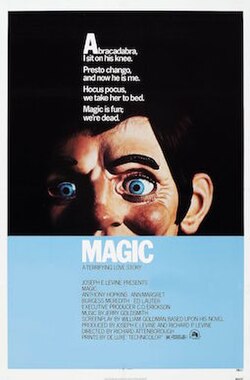
24. Magic (1978): This psychological horror film further popularized the killer doll genre of movies. While it borrows much from previous "killer ventriloquist dummy" media like episodes of The Twilight Zone and the film Dead of Night, it infused a mystery element and was made by a stellar production team: director Richard Attenborough, and a cast featuring Anthony Hopkins, Ann-Margaret, Burgess Meredith, and Ed Lauter elevate this film above the general cheesy killer pupper fare.
Magicposter.jpg

23. Valerie and Her Week of Wonders (1970): This surreal and bizarre Czech film is a twisted fairy tale chronicling a young girl named Valerie's encounters with a thief, a masked monster, and a priest, among other things. A dreamlike film that's almost reminiscent of David Lynch, it packs in some weird and unsettling imagery that sticks with the viewer, and is a great example of an exercise in surrealist horror.

4467 print2.jpg

22. Deathdream (1974): Bob Clark may be best known today for directing A Christmas Story and Murder By Decree, but in the 70's, he was an independent horror film director. And a good one, at that. His films were ahead of their time, and dark and brutally violent, and, best of all, genuinely unnerving. This film was a commentary on the Vietnam War's effects on the folks back home, as well as a quasi-adaptation of the W.W. Jacobs short story "The Monkey's Paw".

Deathdream.jpg

21. The Abominable Dr. Phibes (1971): This Vincent Price vehicle came late in his career, but was successful enough to spawn a sequel. A classic revenge story set around the Ten Plagues of Egypt, the film sees Price once again play a disfigured genius driven mad and fueled by vengeful rage. The kills in the film push the boundaries of believability, but are unique and memorable. A campy and often neglected entry in the horror genre, it's one of Price's better films.

Abominablephibes1.jpg

20. Nosferatu the Vampyre (1979): Werner Herzog's artful remake of the 1922 classic silent film stars Klaus Kinski in the titular role. Shot in both English and German, this film continues in the trend of Herzog and Kinski's partnership, it is a vivid and beautiful film to look at, and Kinski is perfect as Nosferatu. Despite the allegations of animal cruelty and abuse on the set, which Herzog apparently neglected, the movie is still an immensely enjoyable revamp (no pun intended), and one of the few remakes that is on par with its' source material.

Nosferatu Phantom der Nacht.jpg

19. Phantasm (1979): This bizarre and eerie supernatural thriller was a locally financed indie film that wound up spawning a string of sequels, and cementing Angus Scrimm's Tall Man character as an icon of the horror genre. With some nightmarish visuals, unconventional structure, and an imposing boogeyman figure as the villain, Phantasm is one of the more underrated 70's horror films.
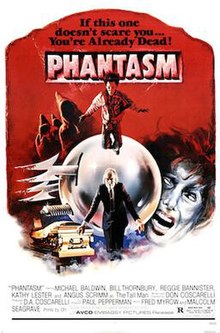
A woman screams and covers her eyes, which are then superimposed over her hands

18. The Brood (1979): David Cronenberg's body horror film serves as a metaphor for feminine empowerment gone awry and as an interesting look at messy divorces, and asks an interesting question: if we could actually manifest those negative emotions we feel towards others, could it wind up controlling us? The shocking and cringe-inducing imagery and nasty special effects paired with those messages part of what Cronenberg does so well: make us think, and make us squirm, often at the same time.

Thebrood.jpg

17. Alice, Sweet Alice (1976): Featuring Brooke Shields in her film debut, this slasher film is a cut above the rest. This mostly owes to the exceptionally creepy and haunting mask worn by the killer, a translucent mask highlighted with drag queen-esque makeup. The film was released three times under three different titles: as Communion at the Chicago International Film Festival in 1976, theatrically in 1978 under this title, and a third time in 1981 as Holy Terror to capitalize on Brooke Shields' growing popularity. While borrowing from many previous films, most notably the raincoat motif from Don't Look Now, this movie stands on its' own as one of the more genuinely scary of the slasher films, and one that predates Halloween. And speaking of Don't Look Now...

Alice Sweet Alice.png

16. Don't Look Now (1973): A startling thriller about psychic powers, serial killers, and ghost girls, the film, much like many 70's horror films, took elements that made old horror films so great, updated them for modern adult audiences, and were being made by some bigger names in the film industry. This one stars Donald Sutherland and Julie Christie, two major stars, and was directed by the acclaimed Nicolas Roeg. This movie has some visually striking images, and one of the best (and most unexpected) twist endings ever.

Dont look movieposter.jpg

15. Black Christmas (1974): Bob Clark shows up again on this list with his dark precursor to A Christmas Story. A brutal and dreamlike film with a mysterious killer, it set a trend for slasher films, and reportedly this was one of the films that inspired John Carpenter's Halloween, as the planned sequel for this film would have taken place on that holiday. The camera angles, opening shot, and violent kills set the stage for Halloween, though this film is even darker, bloodier and more vulgar than that film was. The film has future stars like Olivia Hussey, Andrea Martin, Margot Kidder, and John Saxon, and 2001 star Keir Dullea. The unsolved identity of the killer makes the film unsettling as it leaves so many doors open, and the killer's weird, gender-neutral voice is chilling and sticks in your head.

Black christmas movie poster.jpg

14. The Hills Have Eyes (1977): Wes Craven's second major horror movie was stars future E.T. star Dee Wallace and is a brutal and unapologetic film that chronicles one family's struggle for survival against an inbred family of feral cannibals. Michael Berryman (the man on the poster) was shot to B-movie stardom for his unique physical appearance and imposing performance. The film was successful enough to spawn a sequel and a remake and its' sequel. The movie also further popularized the 70's sub-genre of middle-America family vs. group of deranged killers, and also popularized the feral cannibal sub-genre.

Hillshaveeyesposter.jpg

13. Invasion of the Body Snatchers (1978): This remake of the 1950's classic by Philip Kaufman stars Donald Sutherland, Leonard Nimoy, Brooke Adams,Veronica Cartwright, and Jeff Goldblum. Managing to be just as memorable as the original in its' own way, with surreal, 70's acid-trip imagery and a harrowing twist ending, this movie also has a much more graphic and nasty pod people transformation process and the logic behind the transformations is actually an improvement over the original, which had a plot hole in that area. While not as iconic or important as the original, this reimagining is definitely one of the best remakes of all time.

Invasion of the body snatchers movie poster 1978.jpg

12. The Wicker Man (1973): This dark occult mystery film pits a devoutly Christian police detective against an underground pagan cult. Christopher Lee's performance as the villain Lord Summersisle is one of his more underrated, and the cast, featuring Edward Woodward, Ingrid Pitt, Diane Cilento, and Britt Ekland. It has some great suspense, an interesting soundtrack, a compelling mystery that slowly spirals into a much larger conspiracy, and has a fantastic and horrific ending reveal. The hilarious 2006 remake starring Nicolas Cage is only entertaining on an ironic level, and can't hold a candle to the original.
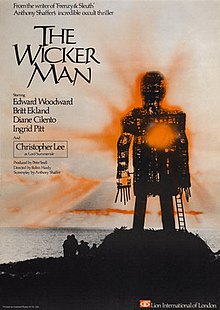
The Wicker Man (1973 film) UK poster.jpg

11. Eraserhead (1977): David Lynch's first feature is one of the most nightmarish and stomach-churning movies ever made. The bizarre and uniquely nasty imagery, industrial location and soundtrack, dreamlike narrative, and creepy and odd characters set the standard for Lynch films: symbolic and weird movies that creep under your skin.
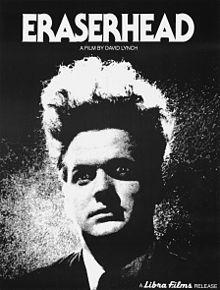
Eraserhead.jpg

10. The Last House on the Left (1972): A brutal and sickening revenge thriller, produced by Sean S. Cunningham and directed by Wes Craven in his debut film, the movie serves a warning about the consequences of revenge. Reflecting the horrific side of the Love Generations showcased by the Manson murders, this grindhouse exploitation film features some of the most brutal violence seen at the time. The violence was enough to get it banned in several countries and cause a lot of controversy upon release. But it is this violence that assaults the viewer and makes them ponder the consequences of it in the real world. Many people mistake this movie for glorifying or sexualizing violence, when it is doing the exact opposite, it is a warning against violence, unlike the 2009 remake, which ends on a slightly happy note and glorifies the revenge sequence at the end of the film as justified.

LastHousePoster.jpg

9. Suspiria (1977): Dario Argento's stylish Italian giallo movie is one of the most beautiful and colorful horror films to look at. Part of his "Three Mothers" trilogy, this movie is famous for its' beautiful cinematography, vivid color palates, and almost fairy tale-esque plot. The score by prog-rock band Goblin is excellent, and set a trend for prog-rock and synth bands composing scores for horror and sci-fi films during the 1980's.
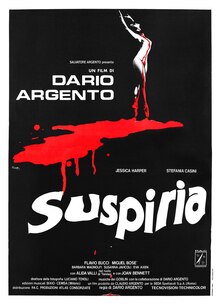
SuspiriaItaly.jpg

8. Carrie (1976): Based on Stephen King's bestselling 1974 novel, Brian DePalma's masterful adaptation darkened the ending and provided some great cinematography and suspenseful sequences. The climactic dance scene is taut and has the viewer on the edge of their seat, until the moment when all hell breaks loose and Carrie has her brutal revenge on all those who wronged her (and some who didn't). Sissy Spacek and Piper Laurie both had Oscar-nominated performances, Spacek for her role as the timid and emotionally troubled teenage girl, and Laurie as her psychotic and domineering Christian mother. Nancy Allen and John Travolta also appear in the film, another case of future A-listers appearing in smaller projects. The relationship between Carrie and her mother is tragic, symbiotic, and cringe-worthy to watch, and is the dramatic backbone of the movie. The first Stephen King movie adaptation was also based on his first novel, and kick-started a string of over 100 adaptations of his various works.

Carrieposter.jpg

7. The Omen (1976): Richard Donner and David Seltzer's Satanic thriller has a moody and atmospheric score, great lead performances by Gregory Peck, Lee Remick, and David Warner, and one of the best "creepy kid" performances by Harvey Spencer Stephens. The mystery surrounding the boy continues to unravel in unexpected ways, and the film masterfully builds to a crescendo where our leads desperately try to stop the horrible force that is Damien. However, unlike The Exorcist, The Omen leaves an a much more ominous and foreboding ending, with no comforting happy ending to be had.

Omen ver4.jpg

6. Alien (1979): Dan O'Bannon's script and Ridley Scott's eye of visuals combine to create the greatest of the sci-fi horror movies. H.R. Giger's phallic and iconic creature design and disturbing art style contribute to much of the film's look. The lead performances by Sigourney Weaver, John Hurt, Tom Skerritt, Veronica Cartwright, and Henry Dean Stanton are phenomenal, particularly Weaver's turn as Ellen Ripley, one of the most bad-ass female leads of all time. The effective use of long tracking shots, false scares, and long periods of suspense and build-up make Alien just as much a Gothic horror/slasher film as it is a sci-fi thriller. And although it borrows a lot from the 1950's film It! The Terror from Beyond Space, it also contributed enough original visuals and scares (chest-burster scene) to be its' own film.

A large egg-shaped object that is cracked and emits a yellowish light hovers in mid-air against a black background and above a waffle-like floor. The title "ALIEN" appears in block letters above the egg, and just below it in smaller type appears the tagline "in space no one can hear you scream".

5. Dawn of the Dead (1978): George A. Romero's follow-up to his 1968 Night of the Living Dead is is color and cranks up the gore and returns to his social commentary. Instead of being about race relations, it's about mall culture turning Americans into zombies. The leads, including Ken Foree, are great and the set-pieces, especially the final sequence where the survivors must face off against both a biker gang and a horde of incoming zombies is spectacular. It surpasses the original in every conceivable way, and although it has a happier ending (the original cut of the film had a much more somber end), it is a darker film than its' predecessor. It also has one of the best lines/taglines in horror history: "When there's no more room in Hell, the dead walk the Earth."

 Painted theatrical release that includes various credits, an ominous zombie looking over the horizon, and the words "Dawn of the Dead" in military print below.

4. The Texas Chain Saw Massacre (1974): Made on a shoe-string budget with a cast of unknowns (mostly Texas natives), Tobe Hooper's grimy and nasty grindhouse film introduced the world to slasher icon Leatherface and his family of deranged cannibals. A film that remains discomforting today due to its' improvised, documentary-style feel and savage violence (most of which is off-screen and implied, leaving it to the viewers' imagination), it also inspired many modern filmmakers, including Peter Jackson, and was a forerunner of the slasher genre. Gunnar Hansen remains the best Leatherface, mostly due to his convincing portrayal that doesn't make him totally sympathetic like the remake tries, but also reminds us that he, too, is human and has good traits (cares for his family's well-being), but also constantly reminds us that he is a force to be reckoned with. His mask seems more authentic than the remake's as well, further creating this weird blurring-the-lines effect where one can't be sure what they are seeing is staged or not. The other actors, including Ed Neal, are so good at portraying demented killers that one could almost be convinced Hooper just cast real crazy people in his movie.

A white film poster of a man holding a large chainsaw, with a screaming woman fastened to a wall behind him. The writing on the poster says, "Who will survive and what will be left of them?"; "America's most bizarre and brutal crimes!"; "The Texas Chainsaw Massacre"; "What happened is true. Now the motion picture that's just as real. "

3. Jaws (1975): Steven Spielberg's innovative blockbuster film faced numerous production problems, resulting in a malfunctioning mechanical shark on set. Due to this, the shark was used more sparingly than Spielberg had hoped, but this led to the team mostly using POV shots of the shark, and because the shark only appeared on screen briefly once in a while, it built up incredible suspense to when it would next appear. With John Williams' iconic and slow-building main theme scoring the film and some great performances by Roy Scheider, Richard Dreyfuss, and Robert Shaw (especially Shaw, who plays the memorable Quint, who gives a chilling monologue about shark eyes), this adventure-thriller based on Peter Benchley's novel remains one of the top 20 films ever made.

Movie poster shows a woman in the ocean swimming to the right. Below her is a large shark, and only its head and open mouth with teeth can be seen. Within the image is the film's title and above it in a surrounding black background is the phrase "The terrifying motion picture from the terrifying No. 1 best seller." The bottom of the image details the starring actors and lists credits and the MPAA rating.

2. The Exorcist (1973): William Friedkin's adaptation of William Peter Blatty's demonic possession horror novel (which in turn was based of a reportedly true story) caused mass waves of controversy upon release. Christian groups claimed it was possessed by Lucifer himself, while most of the general public ran screaming from the theater upon seeing it. The special effects by Dick Smith were revolutionary and still look convincing today. The vulgar language, disgusting imagery, and frightening voice of Mercedes McCambridge as possessed Reagan are what make the film so memorable and terrifying to this day. It was the first horror film nominated for Best Picture at the Oscars, and it is led by a stellar cast, featuring Ellen Burstyn, Linda Blair (doing a great performance for a child actress), Jason Miller, Lee J. Cobb, and Max Von Sydow (playing a character decades older than he actually was). The main theme from the album Tubular Bells is up there with John Carpenter's Halloween score as one of the eeriest and most ear-wormy movie themes of all time.
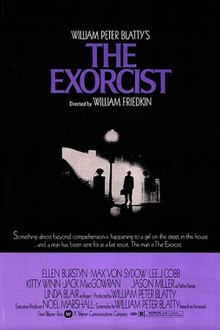
Exorcist ver2.jpg

1. Halloween (1978): John Carpenter's classic slasher film introduced the world to the first of the modern boogeymen (Michael Myers) and really defined the tropes of the slasher genre. It was followed by a slew of copycat films, and shot Jamie Lee Curtis (daughter of Janet Leigh) to stardom and set her "scream queen" status. The musical score, pacing, POV and tracking shots, and performances by Curtis, Donald Pleasance, and stuntman Nick Castle. The lack of gore demonstrates a great amount of restraint on Carpenter's part, and the shoestring budget was made back a hundred-fold by box office revenue and a consistent word-of-mouth campaign. It is undoubtedly the most influential of the 1970's horror films and the best slasher movie of all time.

Halloween cover.jpg

Runner-ups: Vampire Circus, Martin, The Vampire Lovers, Daughters of Darkness, Straw Dogs, I Spit on Your Grave, House (1977), Piranha!, Legend of the 7 Golden Vampires, Tourist Trap.

Monday, August 31, 2015

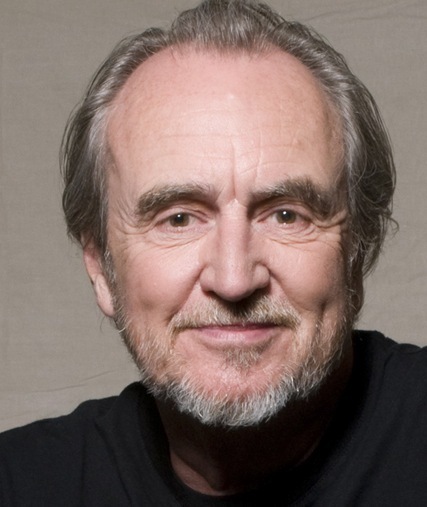
R.I.P. Wes Craven

Yesterday, horror icon Wes Craven died after a battle with brain cancer. The 76-year-old filmmaker is renowned for being one of the innovators of the modern horror film, dabbling in 70's exploitation cinemas as well as revolutionizing the slasher genre both in the 80's and then 90's, breathing new life into the genre on both occasions. Despite not branching out into other genres that often, his few efforts that did, including the directorial ensemble film Paris, je t'amie and the Meryl Streep film Music of the Heart were both generally well-received and showcased his talents as more than just a genre director. Within the horror/thriller genre, he created classics such as The Last House on the Left, The Hills Have Eyes, and (his two most well-known films) A Nightmare on Elm Street and Scream. He had creative input on the first few Nightmare sequels, and directed 1994's New Nightmare, a ten-year anniversary film that is self-aware and features many of the cast and crew of the original playing themselves as Freddy Kreuger finds a way into the real world. The Scream series (all directed by Craven, and three of which were written by Kevin Williamson) followed in the footsteps of New Nightmare by being a self-aware take on the slasher genre, only this time taking it to the extreme by having the main cast constantly interject references to horror films, cliches, characters, etc. He also directed a number of underrated gems, such as Shocker, The People Under the Stairs, Swamp Thing (a campy adaptation of the DC Comics character), The Serpent and the Rainbow (an eerie Bill Pullman film about voodoo), and the thriller Red Eye (starring Rachel McAdams and Cillian Murphy), which is the best of his newer films. His most recent films, such as My Soul to Take, were not well-received, which is unfortunate, and I would have loved to see him try and pursue work outside the genre more, and apparently, he hoped to do that, too. Craven will always be remembered for his huge impact on not only horror, but film and pop culture in general.

                                                                         Wes Craven
                                                                  1939-2015 (age: 76)


                                                              (Image: Wikipedia)

Monday, August 17, 2015

Straight Outta Compton: The rise and fall of the World's Most Dangerous Group

Today, I look at the new biopic about rap group N.W.A.

Straight Outta Compton:
Retelling real-life events from the group members' origins to the inception of the group itself, to their quick breakup and solo careers and feuding, the film focuses in on key members Ice Cube, Dr. Dre, and Eazy-E.
    First of all, let me compliment this film for exceeding my expectations immensely. I was expecting yet another bland music biopic along the lines of Jersey Boys and Notorious. This is not that film. The main cast of O'Shea Jackson, Jr. (playing his father Ice Cube), Corey Hawkins, Jason Mitchell, Aldis Hodge (brother of Edwin Hodge), and Neil Brown, Jr. are fantastic, not only resembling most of the band members remarkably, but making me believe they are those characters. Paul Giamatti has an entertaining supporting role as manager Jerry Heller, who is a surprisingly nuanced character. R. Marcus Taylor plays the notorious producer Suge Knight, an imposing figure who is the closest thing the film has to an antagonist. There are numerous cameos by actors portraying every major West Coast rap figure, from Snoop Dogg, to The DOC, to Warren G, to Tupac. Almost every one of them (with the exception of maybe Snoop Dogg) looks and sounds exactly like their real-life counterparts (Tupac was so convincing I thought for sure they had used some sort of previously recorded footage, but no, it's an actor named Marcc Rose coupled with a convincing voice-over actor named Darris Love). One of the better decisions was the choice to show all of the characters, even Heller and Knight, as mostly nuanced, showing the good and bad of each member. I have yet to confirm this, but it seemed from the way the audio sounded that during the rap scenes, they dubbed the main actors over with the original rap tracks, a move I considered unique and probably the best choice the filmmakers could have made.
    The director of this film is F. Gary Gray, known for his work on Friday, The Negotiator, and The Italian Job among other films, does a great job here. He reportedly left work on Captain America: The Winter Soldier to work on this film, and I'm glad he did. I feel in the hands of a lesser director, this could have been a bland mess.
    This film is mostly accurate to true events, with only some altered or removed for time's sake. And, because Ice Cube and Dr. Dre are producers, some incidents involving them were probably left out because they want to leave that stuff in the past. MC Ren was critical of the film due to his character being more of a supporting one than a main star, though this was his reaction to the initial trailer, and he has yet to comment on the actual movie.
    The film was actually very engaging, and parts of the movie made me feel like I might have been at a concert, as whenever the music was played on screen, I got this sense that the entire audience wanted to join in singing along the lyrics.
    Despite the film being a little lengthy, and definitely feeling its' length (two and a half hours), I can't really say I was ever bored. Straight Outta Compton is an entertaining, fun, and occasionally gripping biopic, even if some of the cheesy name-drops and references (like to the film Friday) get a little grating. 7/10 stars.

Straight Outta Compton poster.jpg                                                (Image: Wikipedia)

Saturday, August 15, 2015

The Gift: Joel Edgerton's surprising directorial debut

Today, I look at the latest film from Blue Tongue, the production company of the Edgerton brothers.

The Gift:
Successful couple Simon and Robyn move into a new home after trying to start fresh. However, quickly after doing so, Simon runs into an old high school acquaintance of his: Gordon, or "Gordo". While awkward, Gordo seems harmless and friendly so Robyn invites him to dinner. However, after Gordo continually shows up at their home uninvited, presenting various "gifts", and seeming to stalk them around town, Simon seems intent on exposing Gordo for the freak he sees him as to Robyn, who still thinks Gordo is just a nice guy. However, Robyn comes to realize that Gordo is hiding something from them, and that Simon may be hiding something, too, and that these two may be more than just old high school acquaintances.
    Despite being marketed poorly as just a run-of-the-mill thriller, my interest was peaked after hearing good reviews and seeing that this was Joel Edgerton's directorial debut. While it's nothing genre-busting, The Gift is a surprisingly taut psychological thriller with some great performances. Edgerton himself is a star of the film, and delivers a complicated performance as Gordo. While he is technically an antagonist, the film slowly peels back the layers to reveal a pain-stricken and broken man who never really got the quality of life he deserved. Jason Bateman, following in the trend of Vince Vaughn and Adam Sandler, is a comedic actor who has recently been turning to more dramatic roles, and has actually shown he is better in dramas than he is in comedies. Now I actually like Jason Bateman in most stuff he's in, but much like Sandler and Vaughn, he pretty much plays himself in everything, even Arrested Development. Here, I had to remind myself at times that I was watching Jason Bateman, much like how in this past season of True Detective I had to remind myself I was watching Vince Vaughn. I won't give much away about his role, but he's surprising to say the least. Rebecca Hall, who hasn't been in too many movies of note since about 2013, has a definite comeback role in this as well. The supporting cast is made up of Tim Griffin, Allison Tolman, P.J. Byrne, Wendell Pierce, Katie Aselton, Busy Phillips, David Denman, and Beau Knapp, who all do fine jobs but aren't really given enough screen time to really leave an impression other than being recognizable faces, as the film is mainly told from the perspectives of the three leads.
    The music is pretty standard, but the cinematography took me by surprise. The camera angles are smooth and slow-moving, and some of the ways they played with the background and focus were refreshing for a genre that so often forgets that part of the fun of a movie is using the visuals cleverly.
    The Gift may not be much of a game changer, but it certainly knows how to build suspense and keep the audience guessing. It is one of the best films of the year that I've seen, as it defies expectations and does enough different to not get squandered down in mediocrity (something I think is a recurring theme throughout this year's releases). 7/10 stars.

Note: I'm altering the ratings system to "out of 10" from "out of 5", because I feel it's more accurate.


The Gift 2015 Film Poster1.png                                              (Image: Wikipedia)

Sunday, August 2, 2015

R.I.P. Roddy Piper

On July 31st, "Rowdy" Roddy Piper died of cardiac arrest in his sleep at his home in Hollywood. Despite mostly being known for his wrestling career, Piper also delved into the acting world many times, most notably as the lead in John Carpenter's cult horror-comedy/social satire They Live, and as the recurring wrestler character "Da Maniac" in FX's It's Always Sunny in Philadelphia. Piper was one of the most prolific entertainers and sports figures of the past fifty years, and has since been honored by many friends, colleagues, and admirers, such as Ronda Rousey, Rob McElhenney, and Vince McMahon. Piper himself correctly predicted in an interview on HBO in 2003 that he would not make it to 65, hence why he returned to wrestling at the time, as he could not collect his penchant until that age. He is survived by his wife, four children and four grandchildren.


                                                                Roddy Piper
                                                          1954-2015 (age: 61)
                                                 HOT ROD!.jpg